Industry News
Special Hobby News Nov 2025
Dec
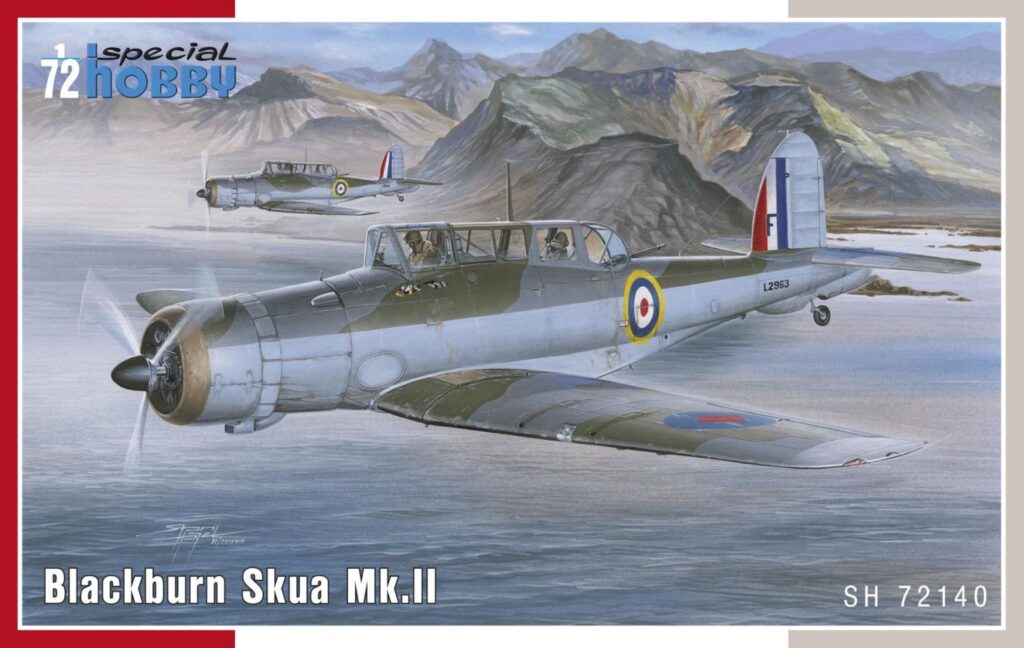
1/72 Blackburn Skua Mk.II
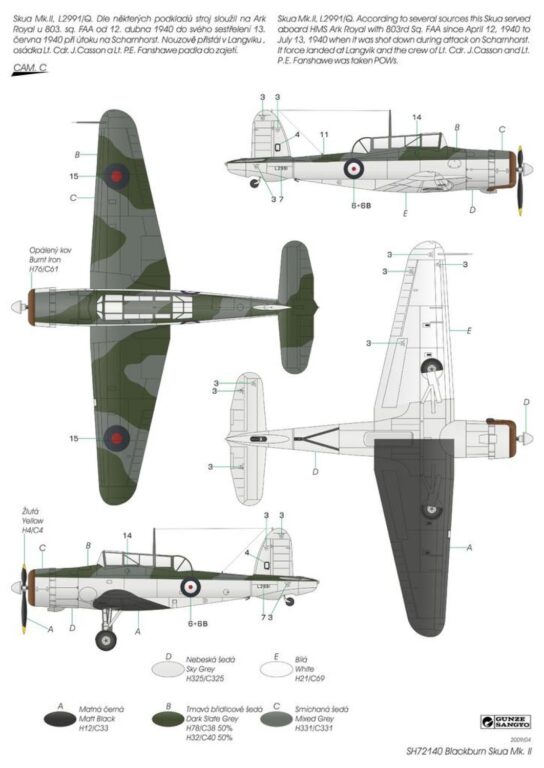
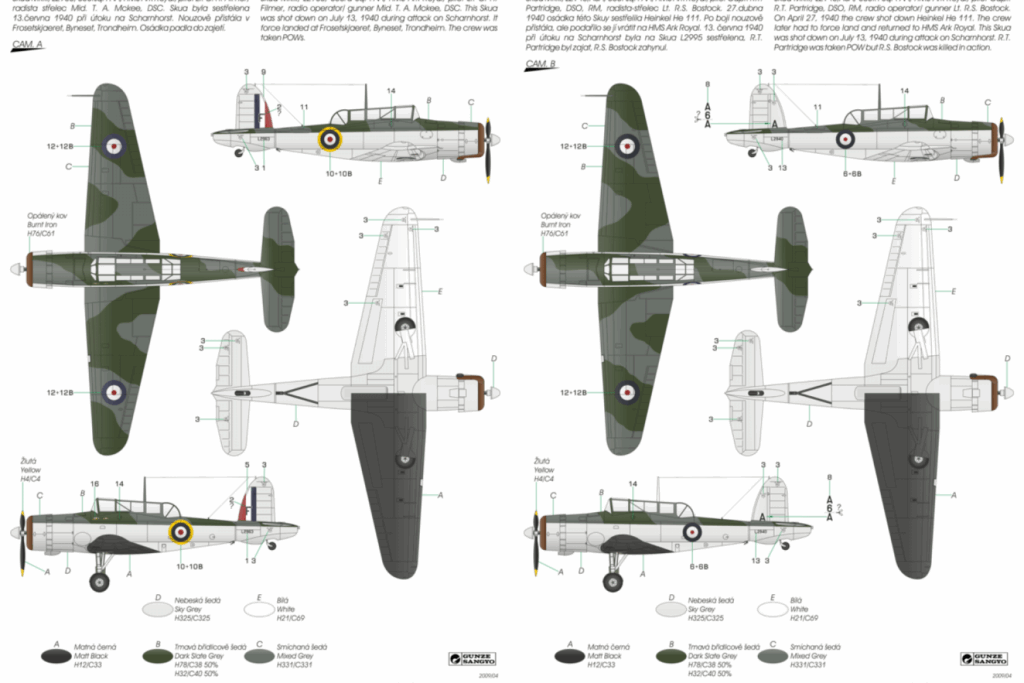
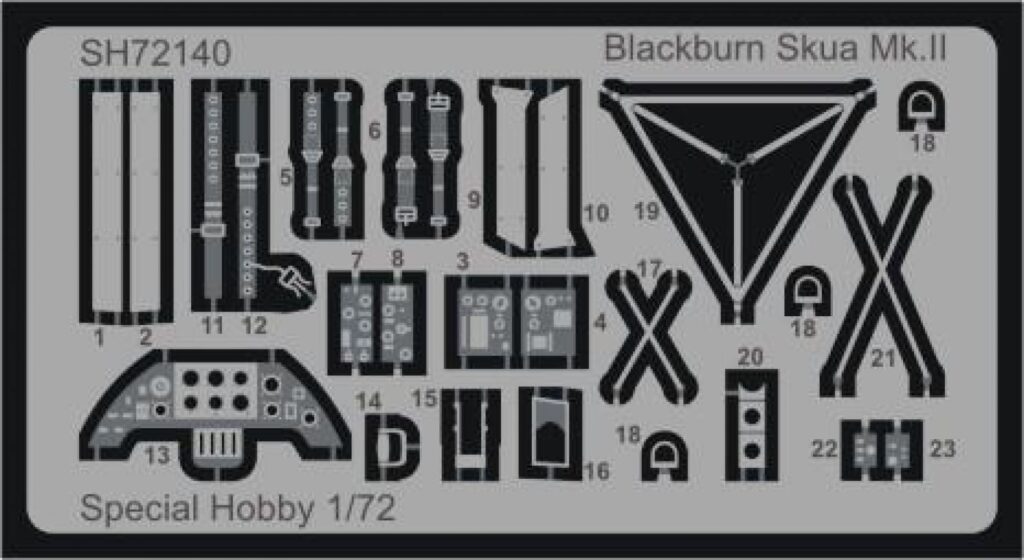
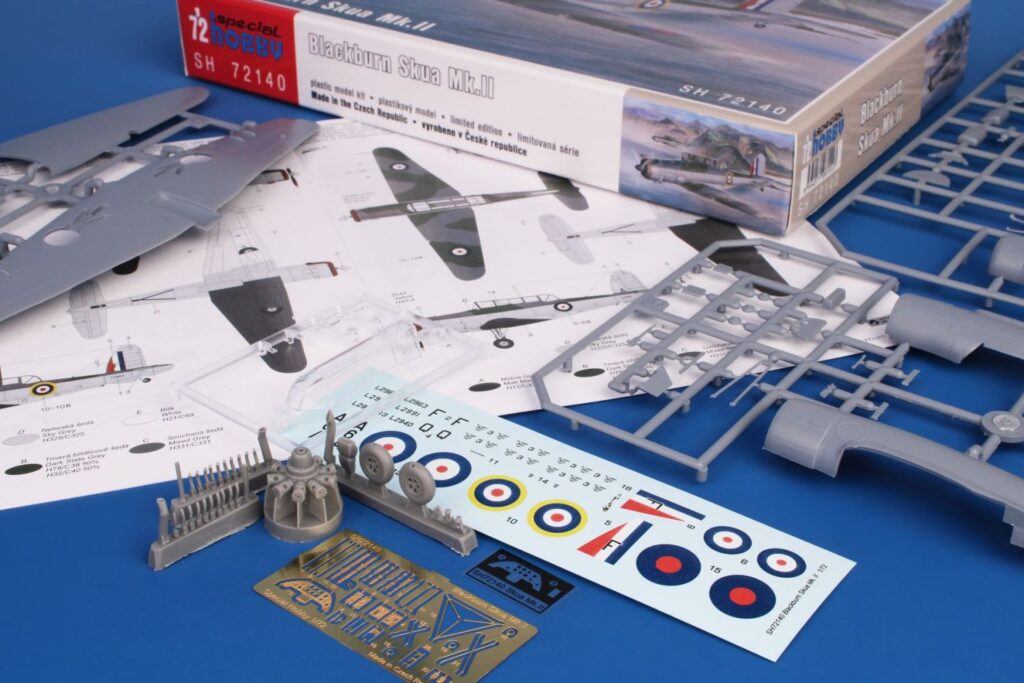
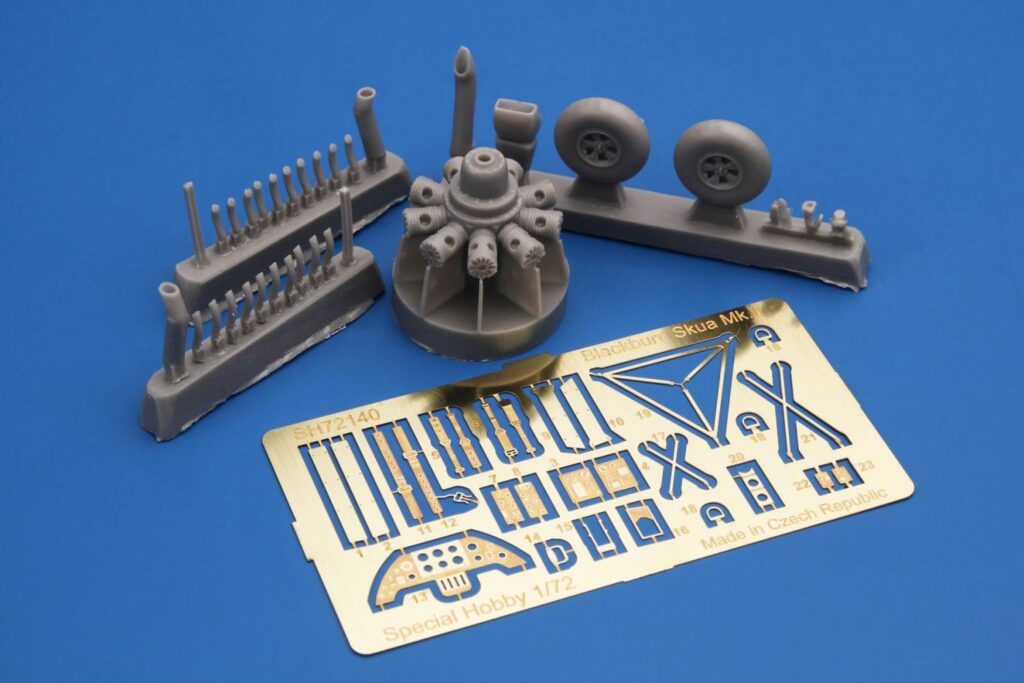
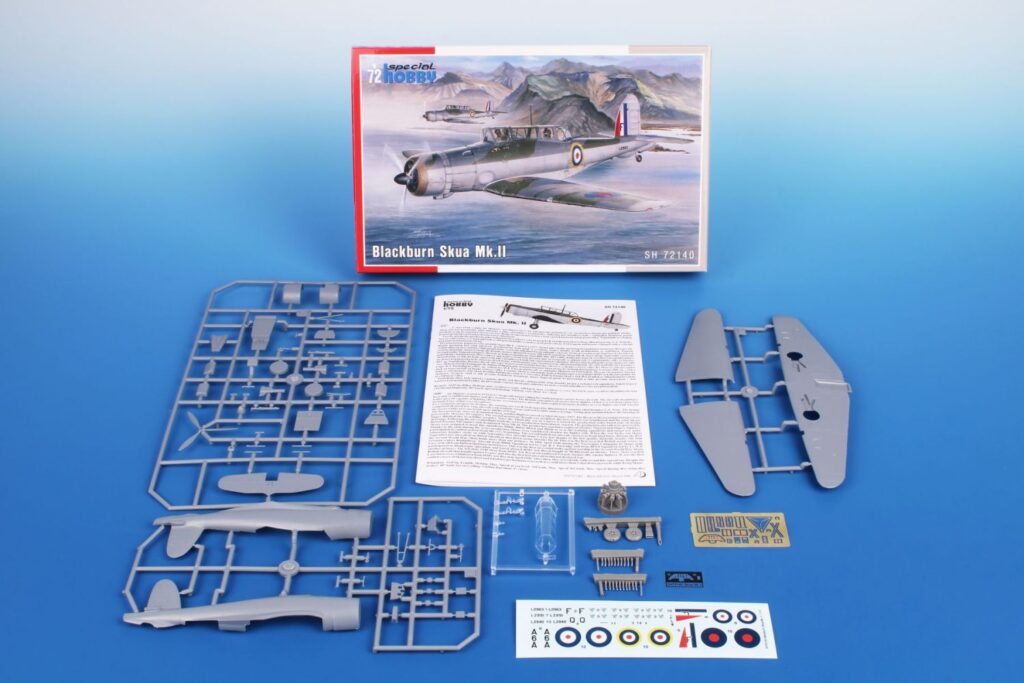
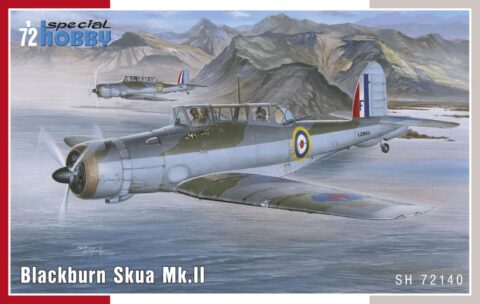
In 1934, the Air Ministry issued specifications O.27/34. They contained requirements for a multi-role aircraft for shipboard service. The aircraft was to be operated as a fighter as well as a dive bomber. A fighter for aircraft carriers in the British concept of the time was a two-seater aircraft designed for long operational flights and combat with enemy reconnaissance aircraft. Combat against enemy bombers, let alone fighters, was not envisaged. The B.24 project by the chief designer of the Blackburn company, Eng. G.E. Petty, was chosen as the best one. Petty designed an all-metal low-wing aircraft with folding wings and retractable landing gear. Under the fuselage, the aircraft had a arresting hook and a recess for a bomb of up to 226 kg. The first prototype, later named Skua Mk.I, took off on 9 February 1937. After successful tests, serial production began immediately. The production aircraft were powered by Bristol Perseus XII engines and were designated Skua Mk.II. They were delivered to fighter squadrons Nos. 800, 801, 803 and 806, and were also supplied to training squadrons and target towing units. Despite the rush in production, they were considered obsolete in the fighter role. With the outbreak of war, Skua aircraft quickly entered combat, operating from both aircraft carriers and land bases. In the first bombing attack on a German submarine on 14 September, two Skuas from a three aircraft section were lost to their own low-quality bombs. On 26 September, two aircraft from No 803 sqn shot down an enemy Dornier Do 18. This was the first confirmed British aerial victory of the Second World War. The Skua is closely associated with more firsts. During the Norwegian Campaign on 10 April 1940, sixteen Skuas sank the German cruiser Königsberg. No 800 Sqn., led by Capt. R.T. Partridge, and No 803 Sqn., led by Lt. W.P. Lucy, took off from Hatston in the Orkneys. This was the first successful air attack on a battleship during the Second World War. Skuas took part in the Battle of Dunkirk and on board HMS Ark Royal they intervened in the fighting in the Mediterranean. Here the Skua achieved another first, on 3 July 1940, a Skua from Ark Royal fought against fighters from a former ally, France. It became the first British aircraft to fight against the French and also the first to be lost in this undeclared war. The last Skuas were withdrawn from HMS Ark Royal in April 1941. They then served only with non-combat squadrons. Their combat career was relatively short, but despite the low performance of the Skuas as a fighter, several aces with more than five kills were achieved on them. As bombers they could have been much more successful, but they were not properly used by the Admiralty, to the detriment of the Royal Navy. We are returning the model to the offer after several years. Two ssprues made of grey plastic are joined by a sprue of clear parts, etchings and detailed PUR parts. Decals are offered for three machines in FAA camouflage scheme.
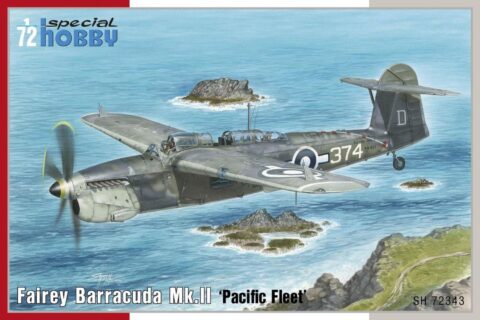
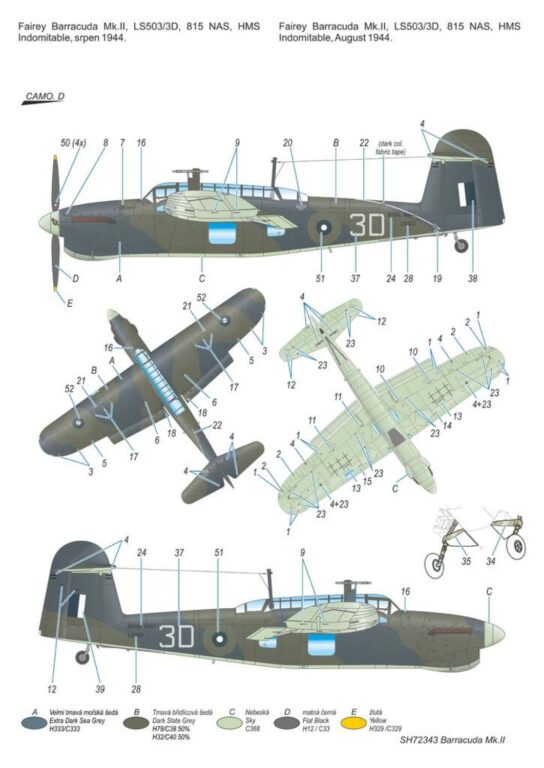
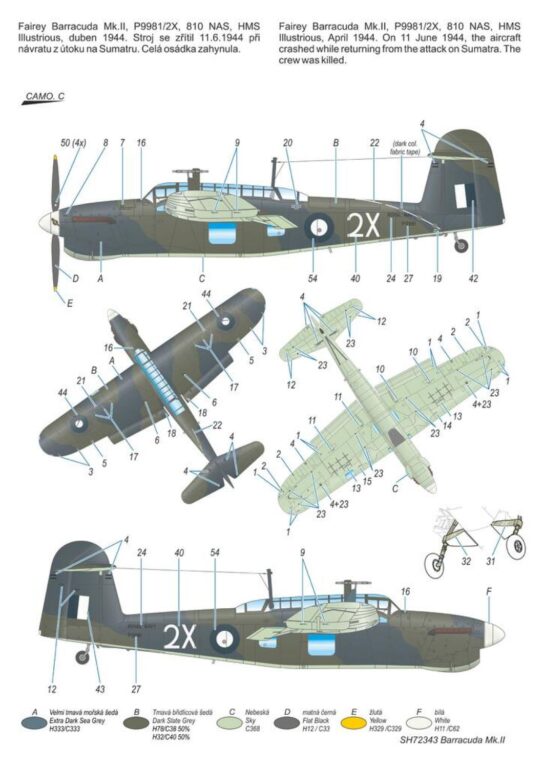
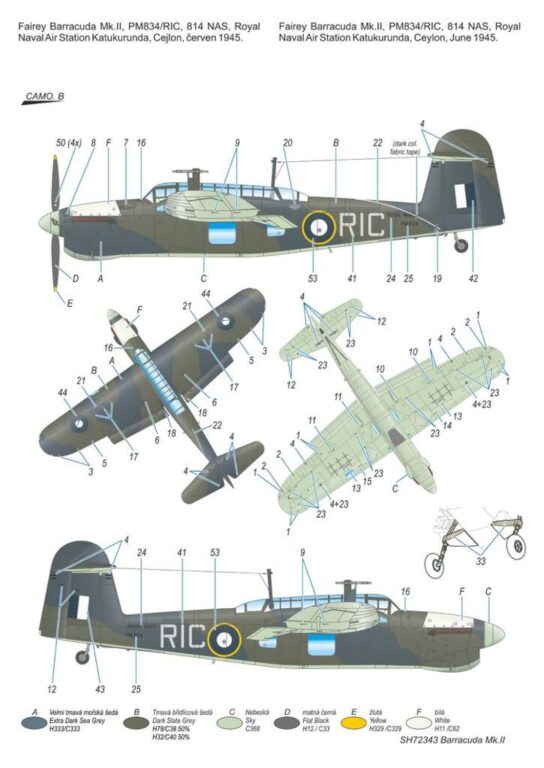
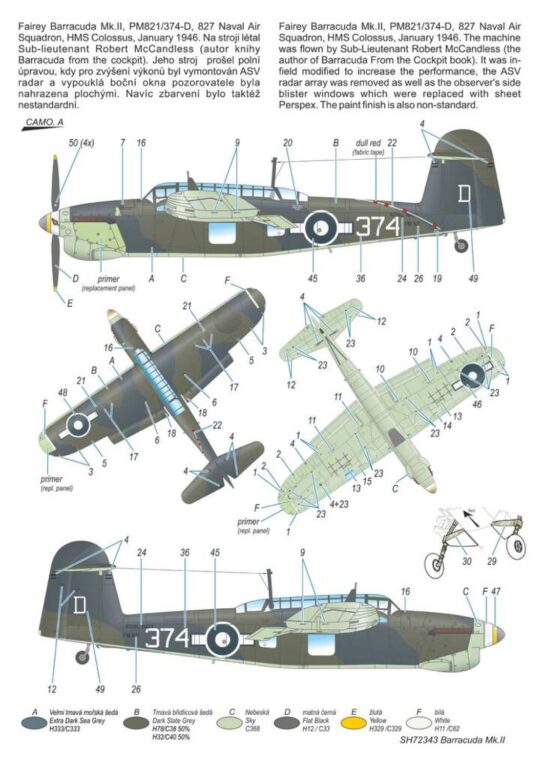
1/72 Fairey Barracuda Mk.II ‘Pacific Fleet’
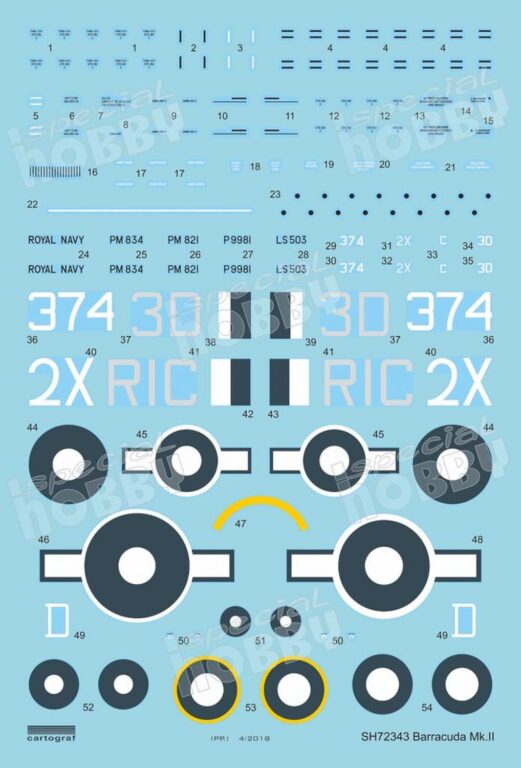
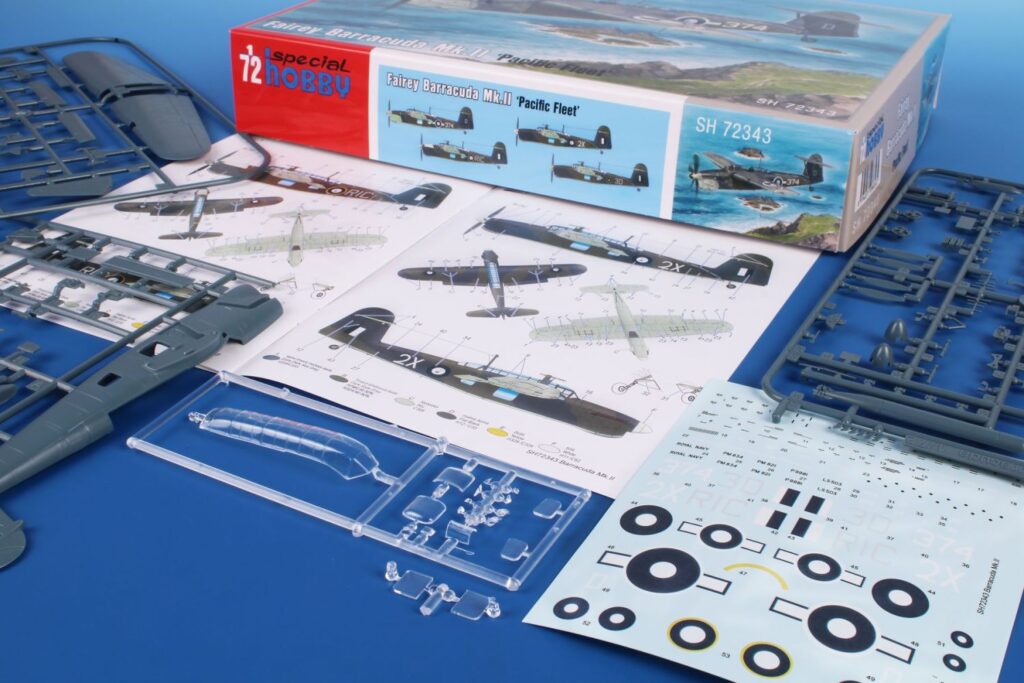
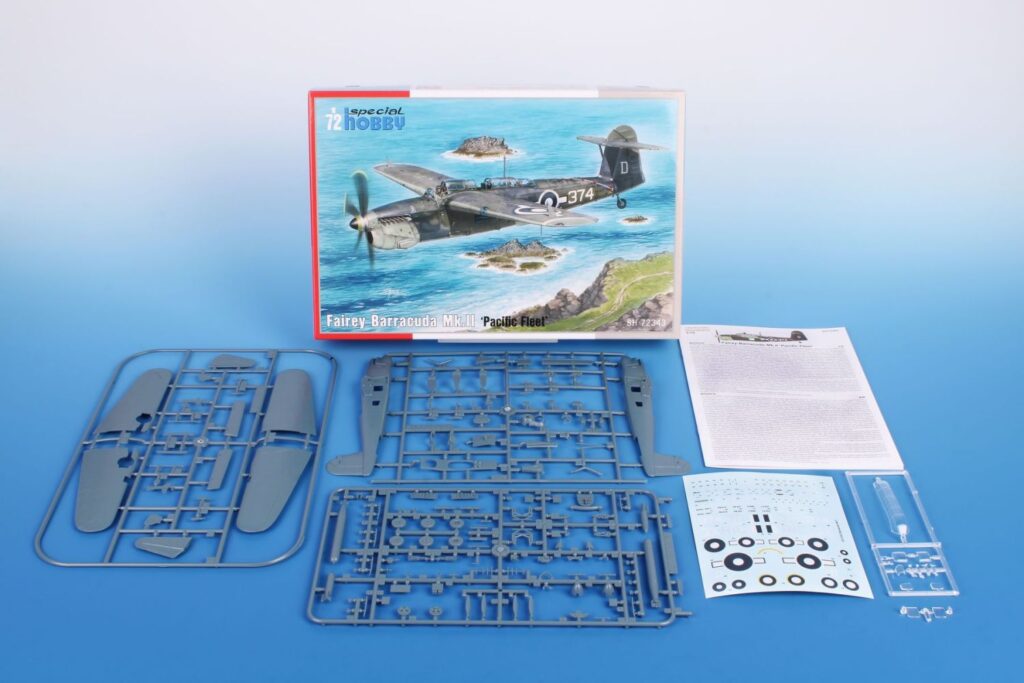
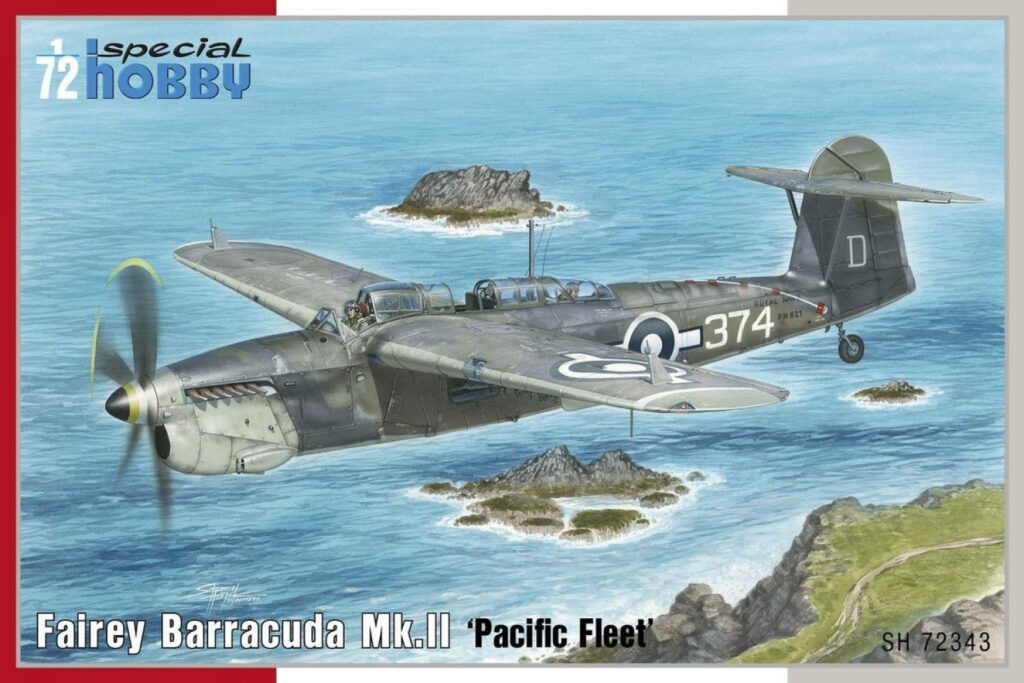
The Barracuda model kit is produced using three metal moulding tools and consists of grey injected styrene sprues and one clear plastic sprue. A torpedo replica or a 1600lb bomb can be fitted beneath the fuselage, the model also has wing armament racks. The kit offers four scheme options with various types of national markings. These Barracudas saw service fighting the Japanese aggressors, three of the machines were used aboard aircraft carriers, the fourth one flew from a land base located on Ceylon. The most interesting airframe of all these options might be the machine flown by Sub-Lieutenant Robert McCandless (Barracuda from the Cockpit book author). It underwent some in-field modifications to achieve better performance, the ASV radar equipment was removed and the bulged side windows of the observer were replaced by flat ones. Moreover, the colour scheme of the machine was also non-standard.
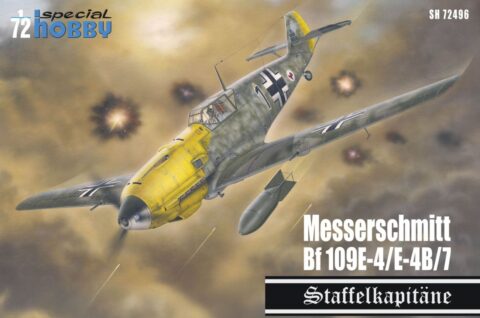
1/72 Messerschmitt Bf 109E-4/7 ‘Staffelkapitäne’
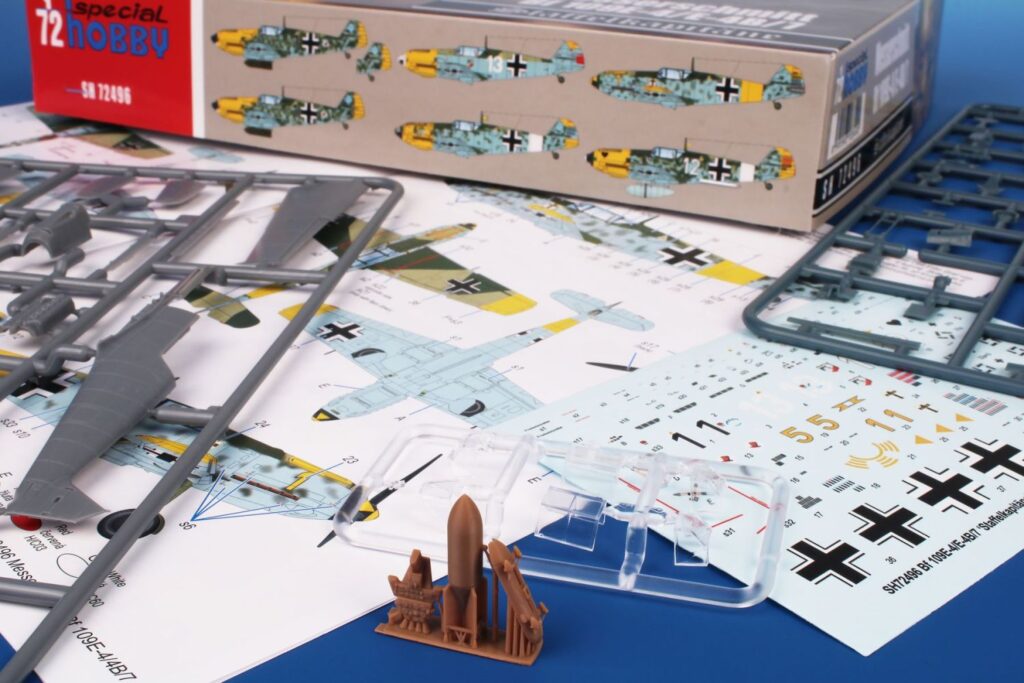
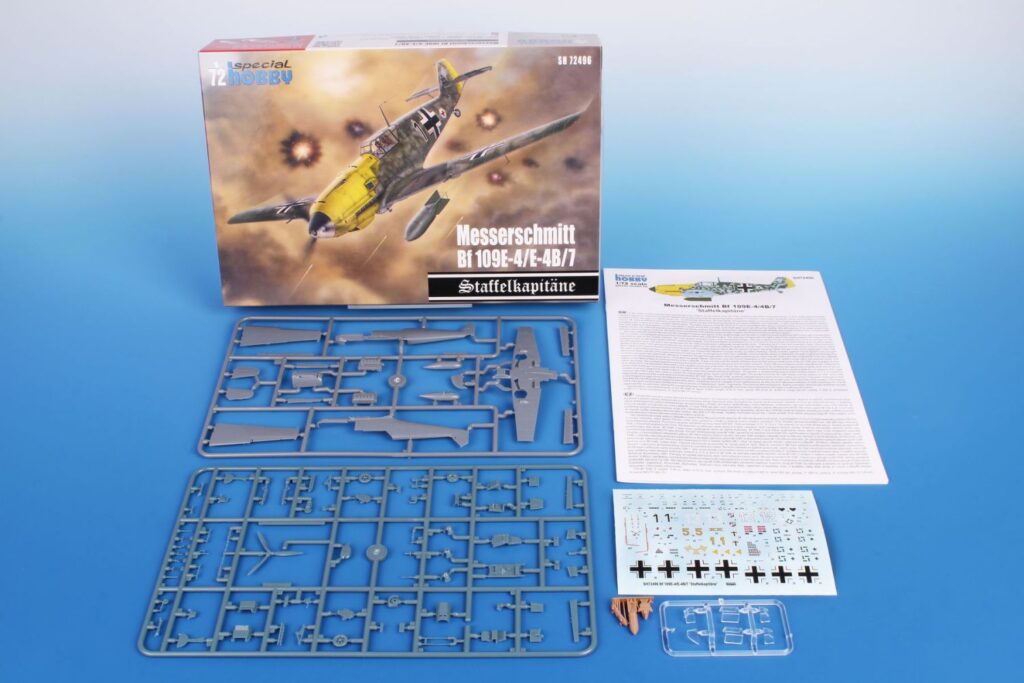
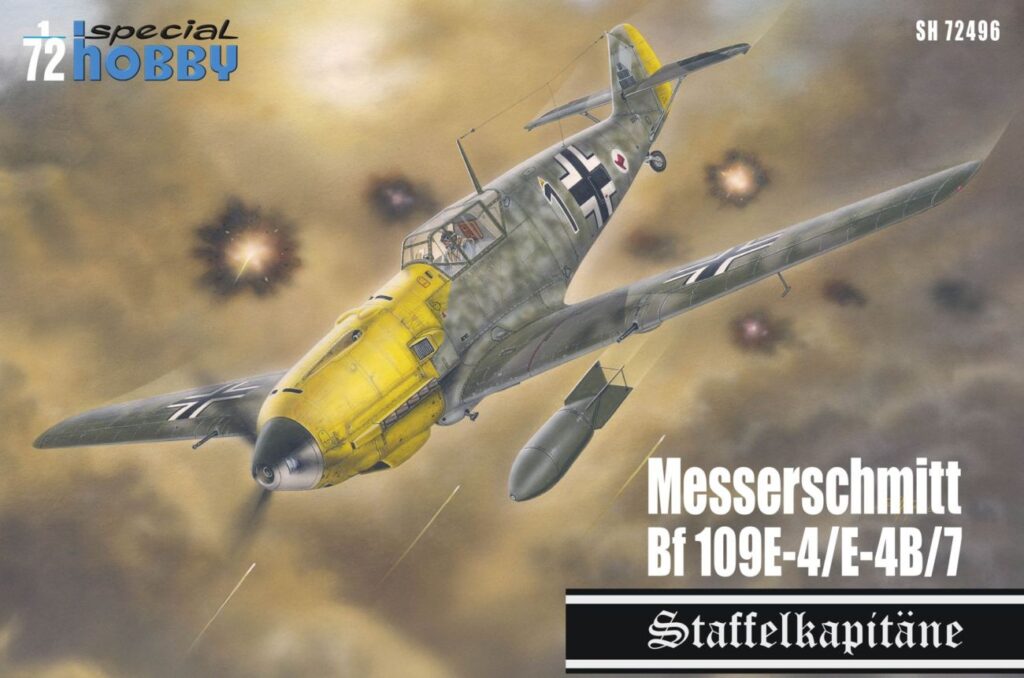
The Messerschmitt Bf 109 is one of the synonyms for a fighter aircraft. The machine, which was in service from 1936 to 1954 in many versions, lasted on the front line from the war in Spain until the end of World War II. The Emil, the Bf 109E version was the first One-Oh-Nine with the DB 601 engine. It is inextricably linked to the beginning of World War II with the attack on Poland, Western Europe and Scandinavia. The Battle of Britain was one of the pinnacles of the Emil deployment, followed by deployment in the Balkans, Africa and over Malta. Until 1941, the Messerschmitt Bf 109E was the best fighter in the world, along with the Spitfire. For this kit, we have selected the machines of four Staffel capitans, interesting in colour schems and the fates of their pilots. Decals are offered for Bf 109E-7, black 1/Wr.N. 2030 Oblt. Herbert Ihlefeld, Stafelkapitän 2.staffel I. (J)/LG2 in several forms. Furthermore, the decals contain the markings for Bf 109E-4, white 13/Wr.N. 1432, of Oblt. Walter Oesau, Stafelkapitän of 7.staffel/JG51, two different Bf 109E-7, yellow 5/Wr.N. 4187 and and Bf 109E-7, yellow 1/Wr.N. 1326 of Oblt.Erbo Graf von Kageneck, Stafelkapitän of 9./JG27. The last machine is the c Bf 109E-7/N, white 12/Wr.N. 3826, of Oblt.Joachim Müncheberger, Stafelkapitän of 7./JG26.
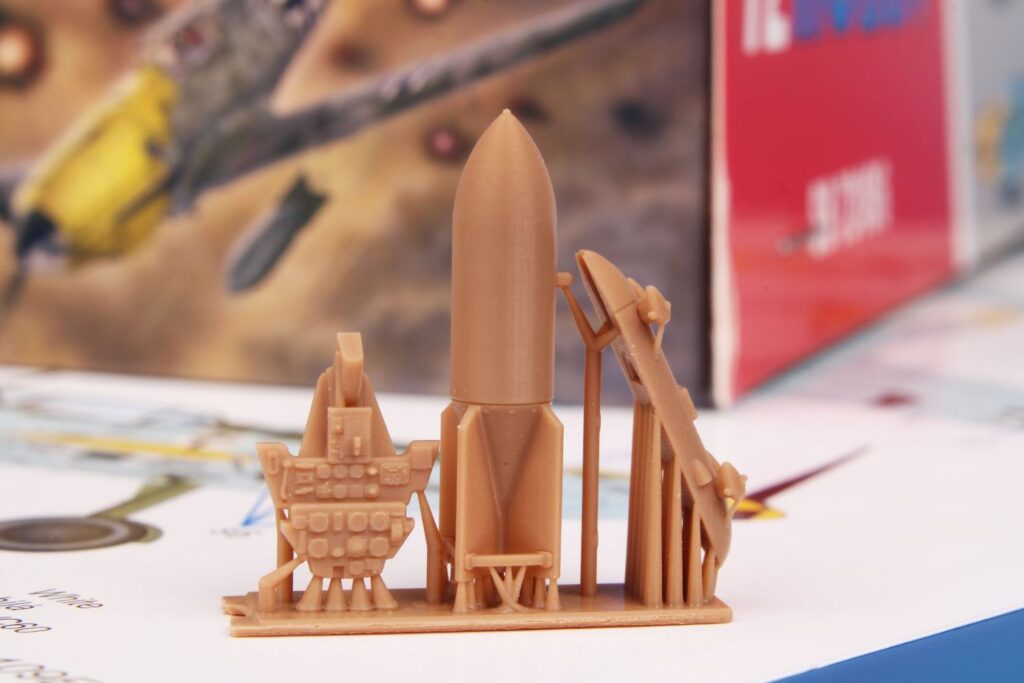
The model parts are broken up into two sprues of gray plastic and one sprue with clear parts. It is possible to build it with the engine and fuselage machine guns uncovered, with the flaps down and the slats extended. For the machine of Oblt. Herbert Ihlefeld, the kit also includes the ETC500 bomb rack and the SD 250 bomb.
– ultra accurate and detailed model
– easy assembly
– the engine can be shown with cowl panels open
– control surfaces, wing flaps and slats can be also posed open, down or extended
– accurate decals for four machines, the sheet also include a full set of stencils
– separately sold clear parts and wheel mask set
– several detail sets and figures also on offer
HobbyLink International
eBay Store