Industry News
ICM News Oct 2025
Oct
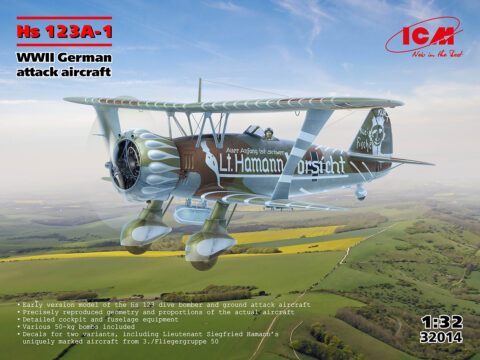
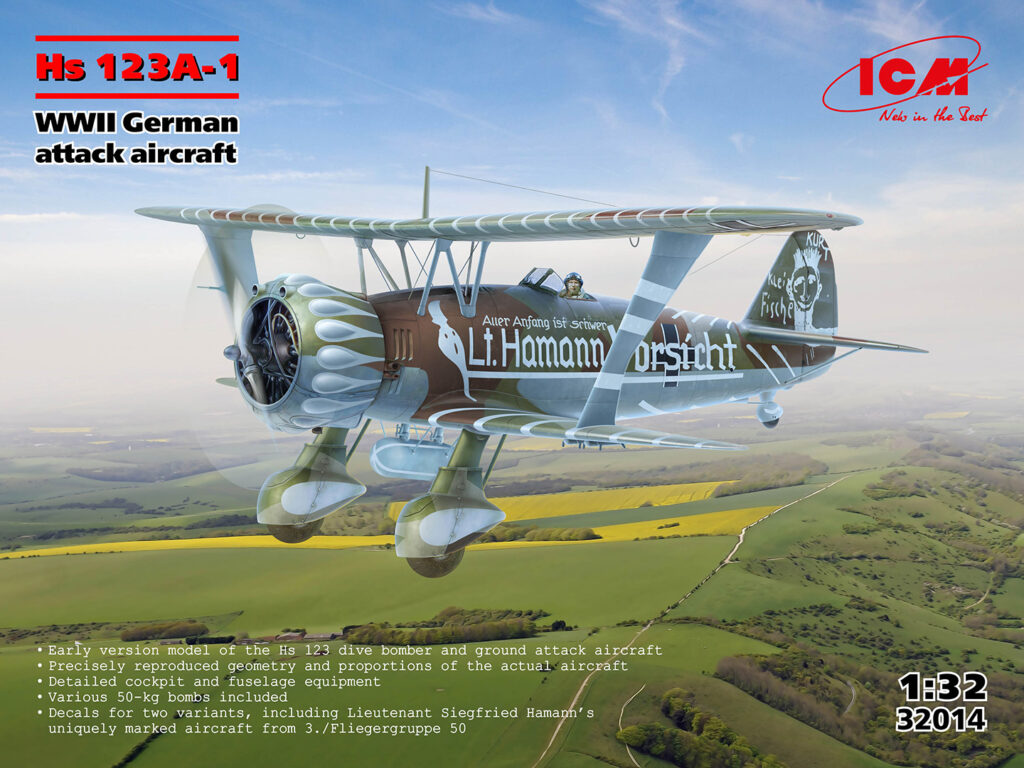
1/32 Hs 123A-1
WWII German attack aircraft
Serial production of the Hs 123 aircraft began in September 1936. Its main purpose was to provide air support for ground forces, with armament consisting of two synchronized machine guns and bombs weighing up to 450 kg. The Hs 123 was supplied to infantry direct support aircraft groups and widely used by training units. During World War II, these aircraft demonstrated high survivability while being deployed in the invasion of Poland, and later in France and the Balkans. Early production models were distinguishable by the absence of a fairing behind the pilot’s cockpit.
In the summer of 1938, an interesting story unfolded involving one such Hs 123. Lieutenant Siegfried Hamann, the adjutant of the 3./Fliegergruppe 50 commander who had no formal pilot training, secretly learned to fly the aircraft and later confessed this to his commander. Given permission to demonstrate his skills, Hamann was provided with an Hs 123 that ground personnel had painted with large, whimsical inscriptions of a humorous and skeptical nature—expressing their disbelief in his abilities. Despite this skepticism, Hamann’s flight was successful, proving his capabilities and earning him status as a full-fledged pilot. By 1939, he had joined III./St.G2 as a pilot and participated in the attack on Poland.
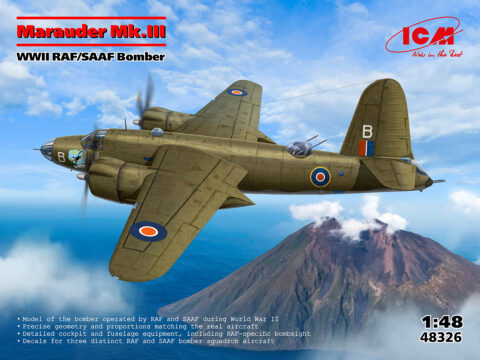
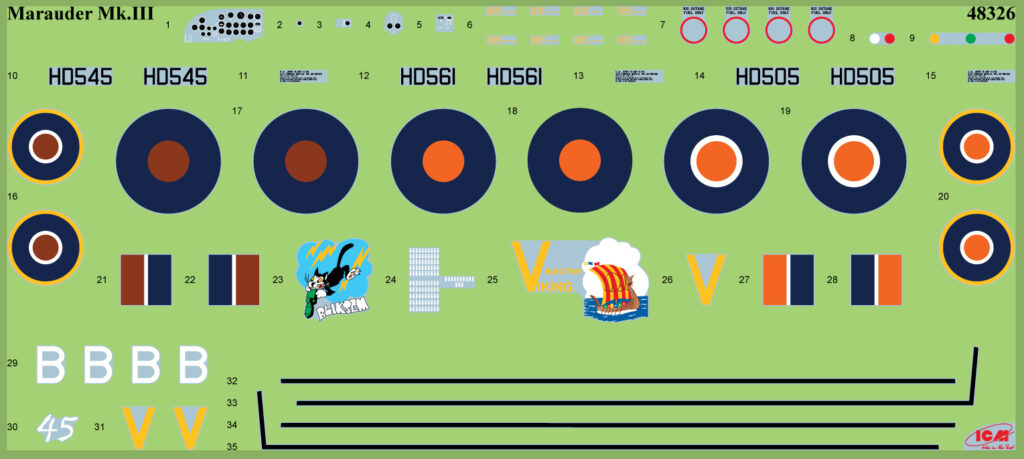
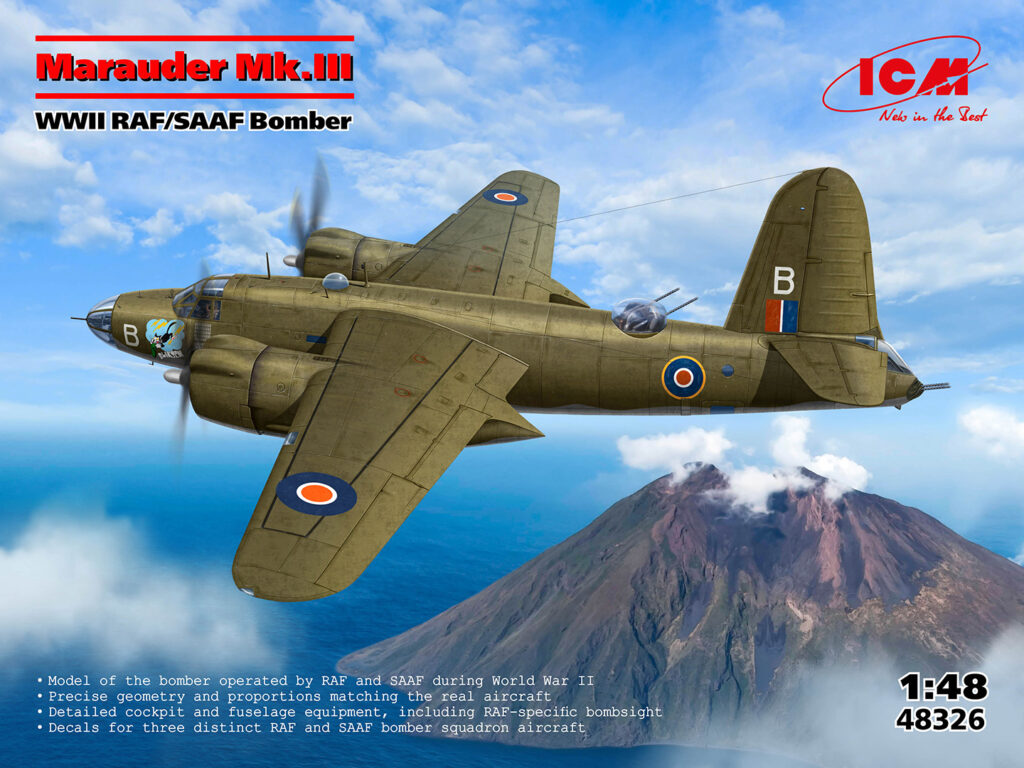
1/48 Marauder Mk.III
WWII RAF/SAAF Bomber
The American factory in Middle River, which built B-26 Marauders, produced 200 bombers for British military aviation that were delivered to the RAF and SAAF. These aircraft, designated Marauder Mk.III with serial numbers HD402 through HD601, were based on the B-26F Marauder model. The B-26F featured significant wing modifications compared to earlier versions, along with a new ventilation mast for fuel tank air access and redesigned nose glazing.
The Marauder Mk.III had only minor differences from the B-26F. All Mk.IIIs featured spoked nose wheel landing gear, whereas B-26Fs typically used solid wheel discs. The tail gun position was also modified—the plexiglass covering near the machine guns was replaced with canvas. Some sources indicate that Marauder Mk.IIIs were equipped with British-designed bomb sights.
These aircraft served in the RAF’s 14th and 39th squadrons as well as in the South African Air Force’s 12th, 21st, 24th, 25th, and 30th squadrons. As part of the SAAF, they provided support during the Allied landing in Italy.
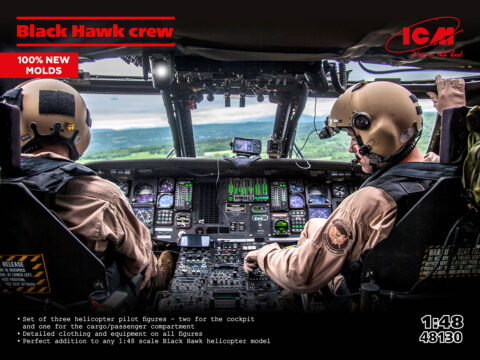
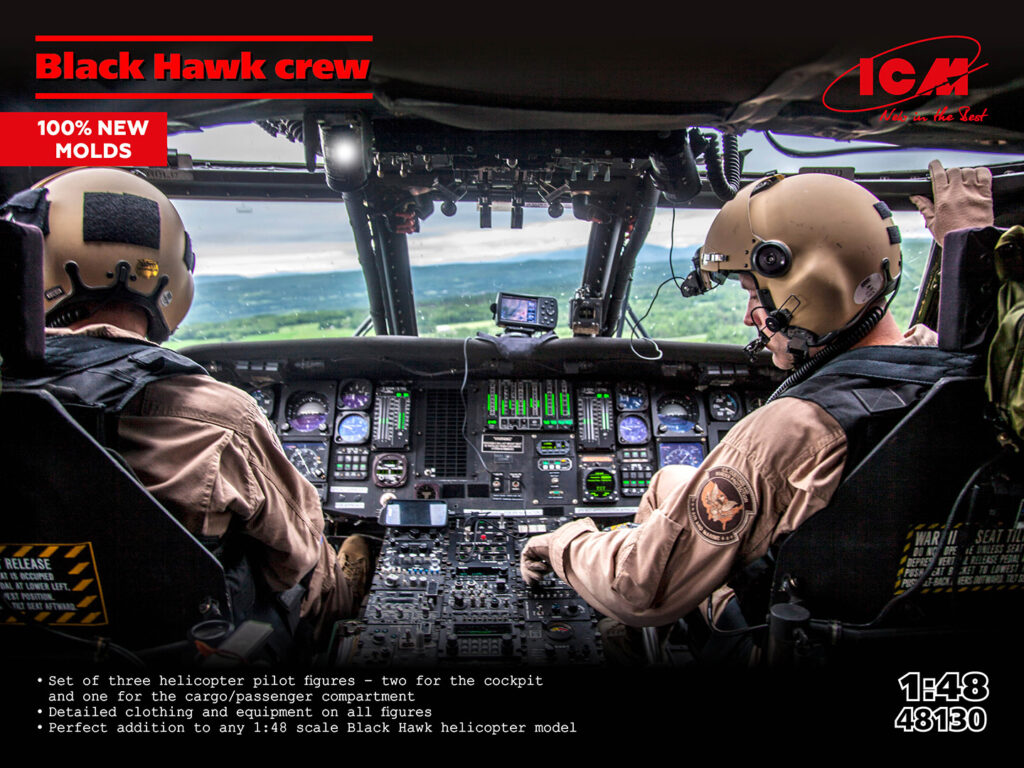
1/48 Black Hawk crew
The UH-60 Black Hawk is one of the world’s most widely used multi-purpose helicopters. With approximately 5,000 units produced and deployed in over 30 countries across Europe, Asia, South America, and other regions, its versatility is evident in its many variants—transport, rescue, medical, anti-submarine, and special operations models.
A standard Black Hawk crew includes two pilots and a crew commander, with pilots handling flight operations and mission execution, while the commander oversees technical maintenance and overall readiness. The crew may also feature one or two gunners operating six-barrel machine guns or other weapons systems when needed. For specialized missions, additional personnel such as rescue specialists may join the crew.
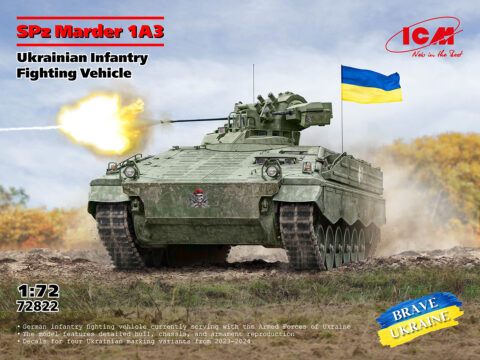
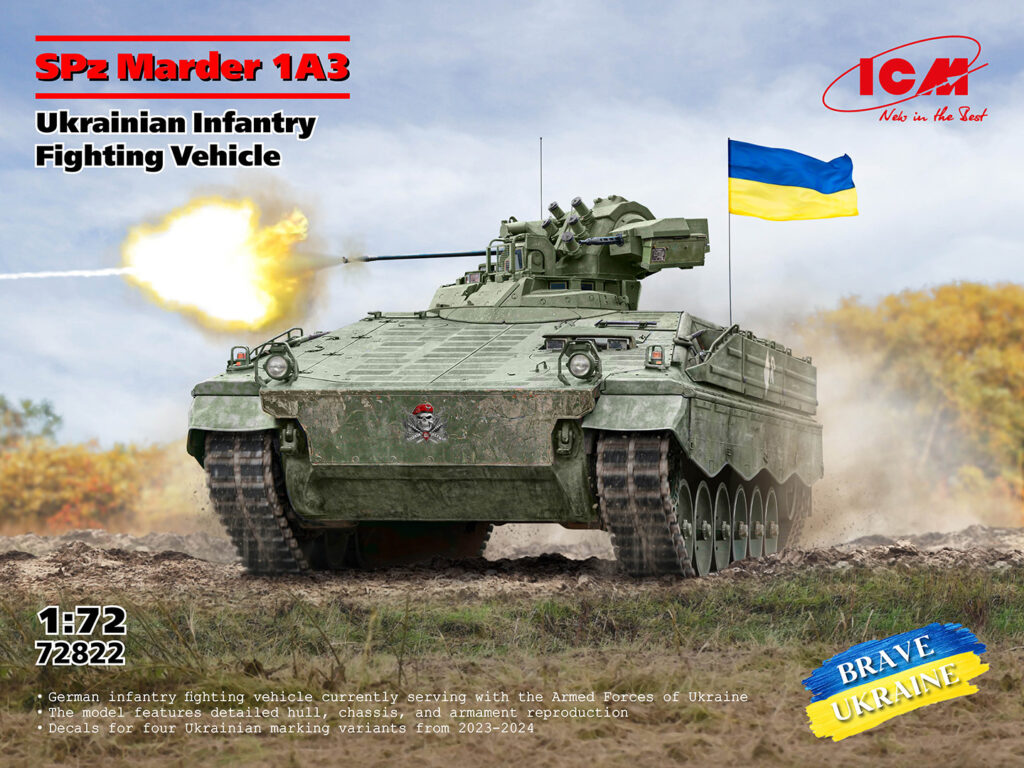
1/72 SPz Marder 1A3
Ukrainian Infantry Fighting Vehicle
The SPz Marder 1 is a German infantry fighting vehicle (IFV) developed by Rheinmetall that has served as the main combat vehicle of the armored infantry divisions of the Bundeswehr since the 1970s.
The vehicle underwent several modernizations throughout its service life, with the A3 upgrade program launching in 1988. This modernization included 1600 kilograms of improved armor, reinforced suspension, a new braking system, and a modified turret configuration. The resulting SPz Marder 1A3 has proven to be one of the world’s most battle-tested and reliable IFVs.
Starting in March 2023, Ukraine began receiving SPz Marder 1A3s, with deliveries continuing until late 2024. Open sources indicate Ukraine received approximately 200 of these vehicles, primarily allocated to the Air Assault Forces of the Armed Forces of Ukraine, where they have demonstrated their effectiveness as well-protected and reliable infantry fighting vehicles.
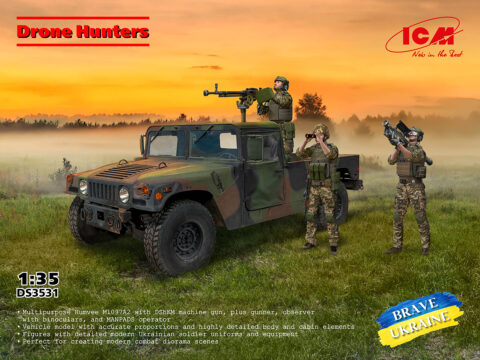
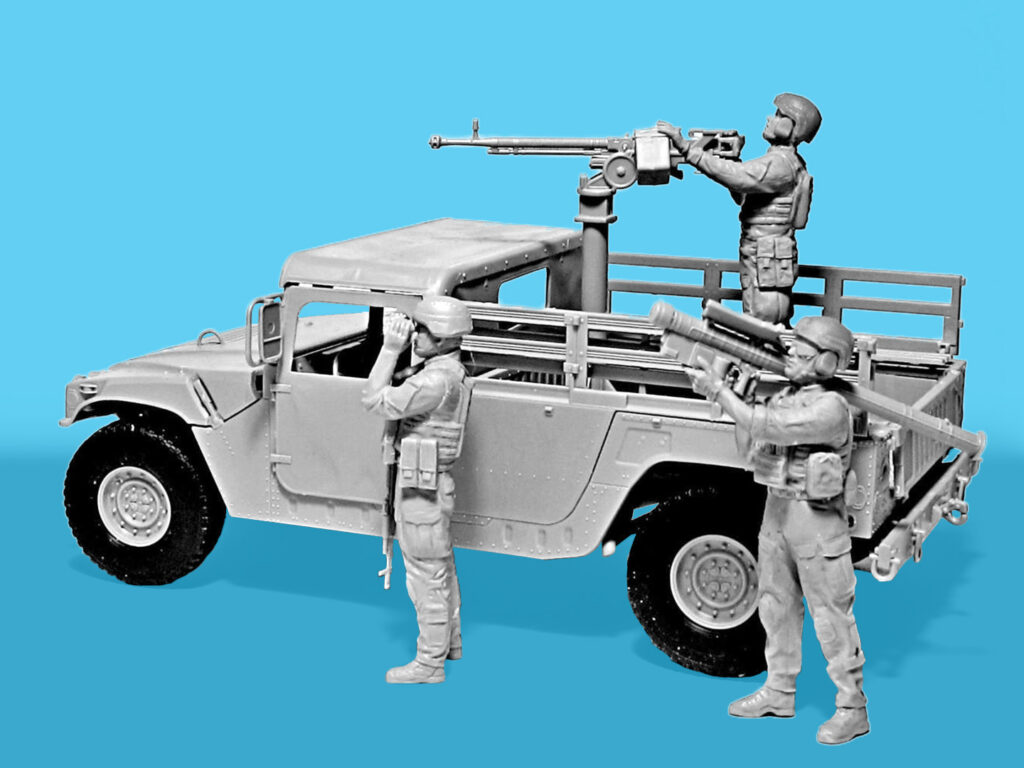
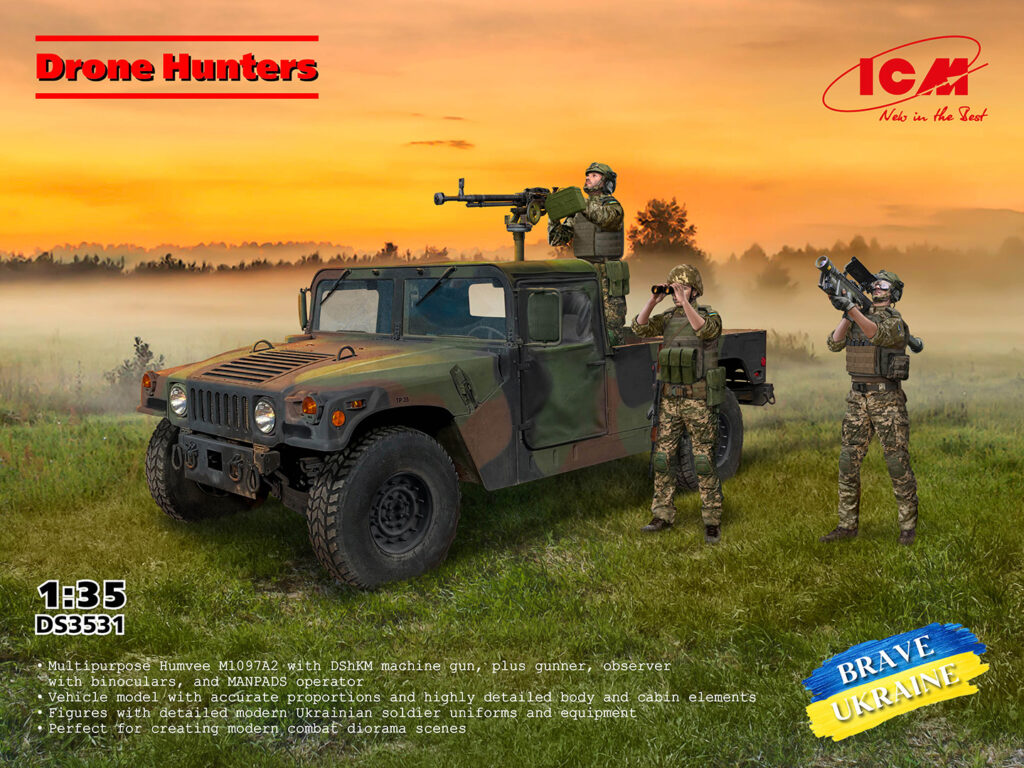
1/35 Drone Hunters
Drones have become a crucial element of modern warfare, fundamentally changing combat operations. Today, hundreds or even thousands of drones are deployed in a single day of fighting. Kamikaze drones—aerial strike vehicles—present a significant danger. These range from small units weighing just a few kilograms to large platforms approaching aircraft size.
The larger drones are particularly threatening because they target rear areas with limited traditional air defense coverage. To counter this threat, Ukraine has established mobile fire groups, nicknamed “Drone Hunters.” These units operate from various vehicles—primarily pickup trucks but also military vehicles—equipped with large-caliber machine guns or small-caliber anti-aircraft guns. The groups are sometimes reinforced with man-portable air-defense systems operators. While most mobile fire groups consist of trained military personnel, some are formed from volunteers.
HobbyLink International
eBay Store