Industry News
ICM News May 2025
May

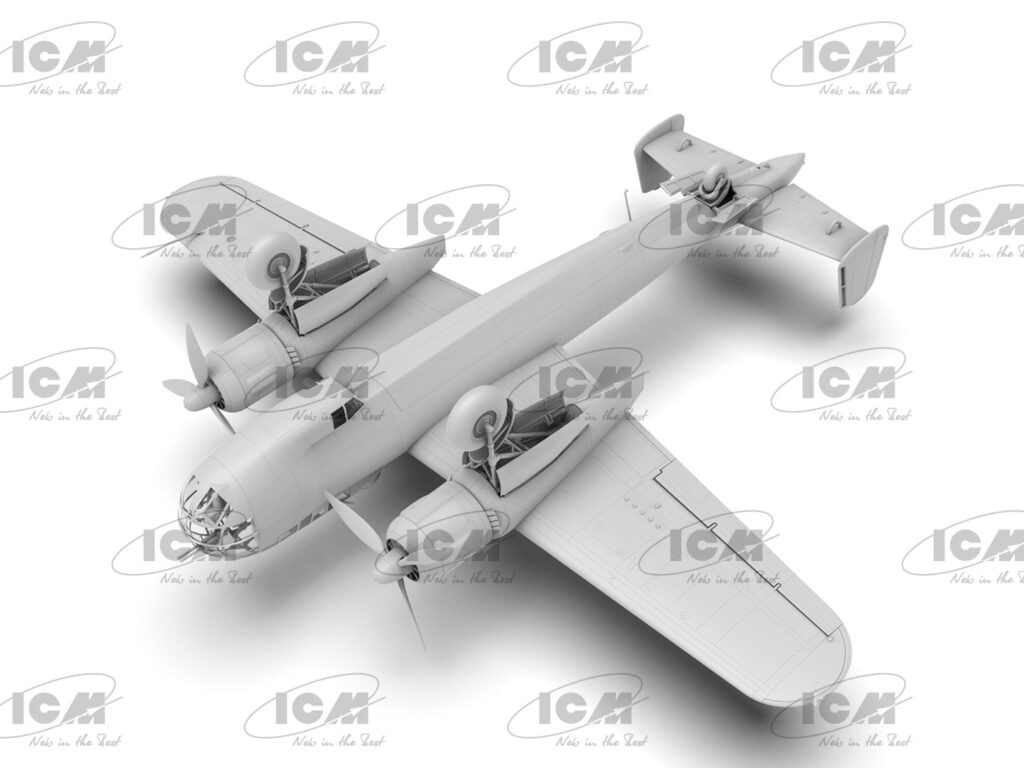
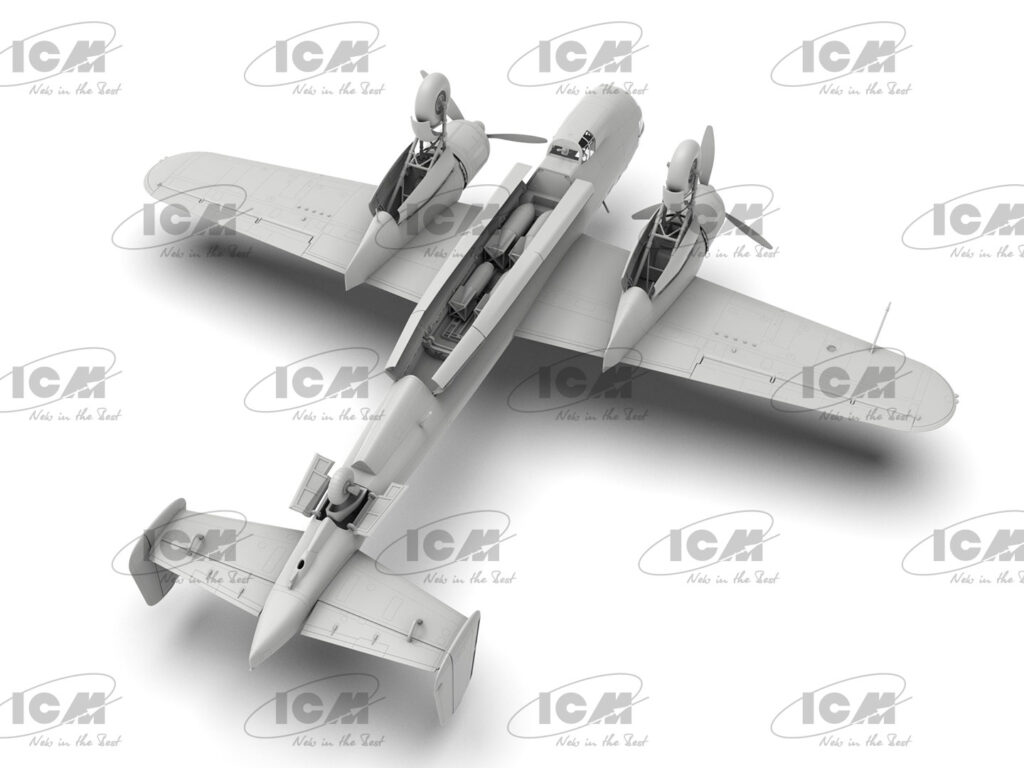
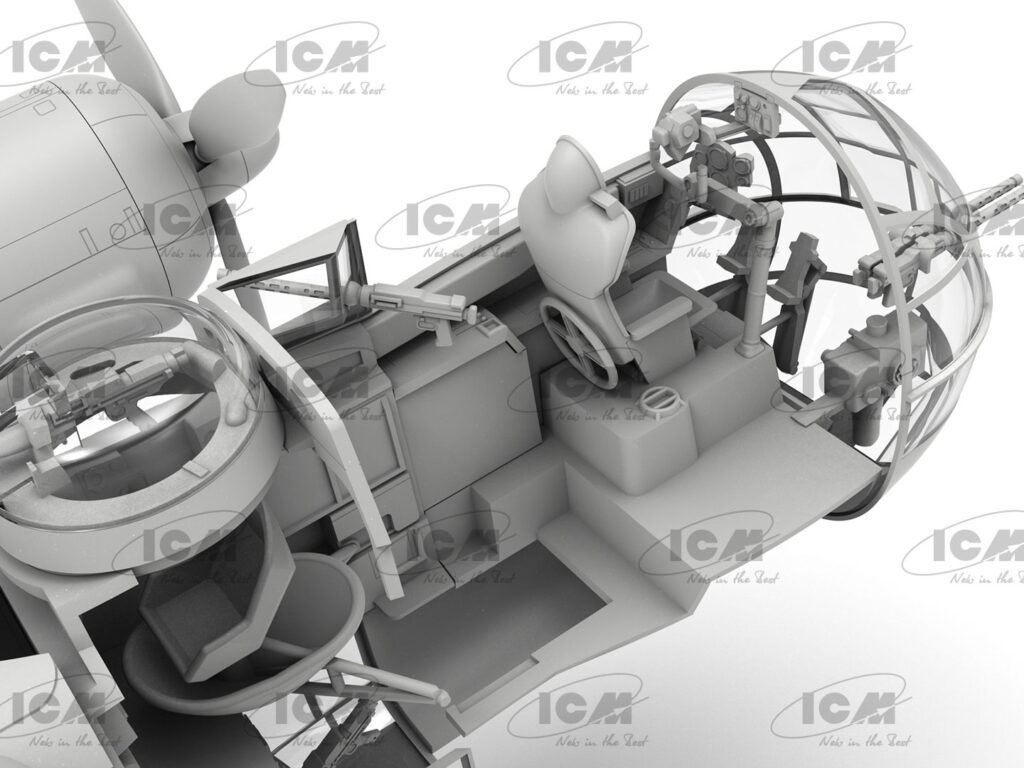
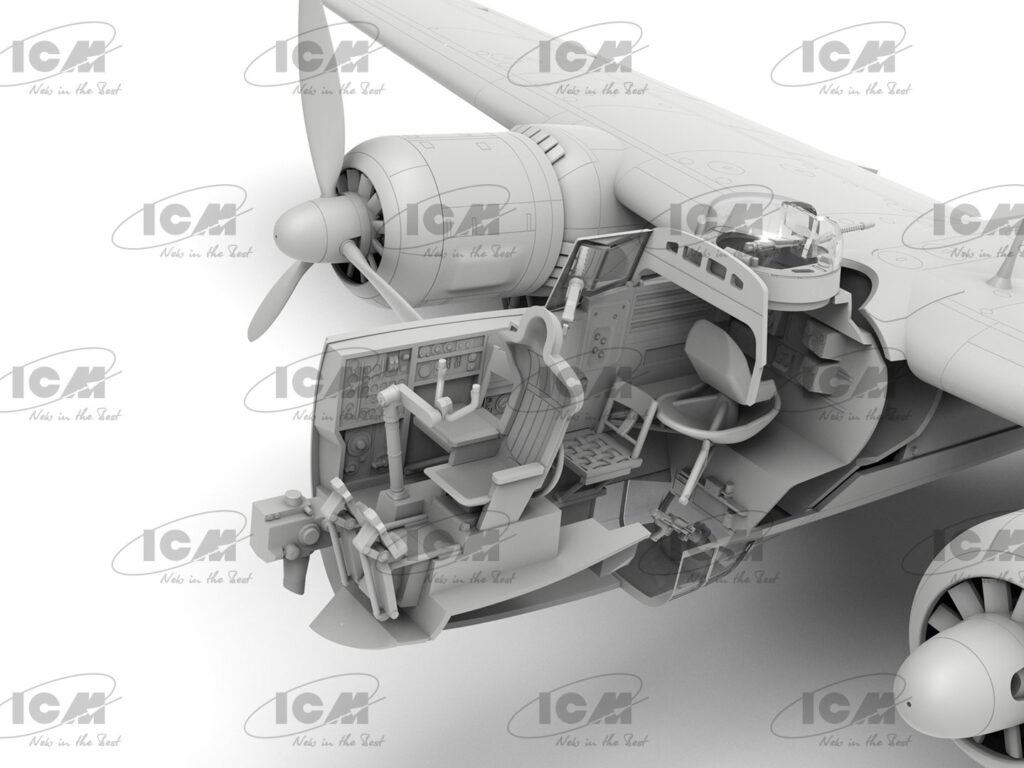
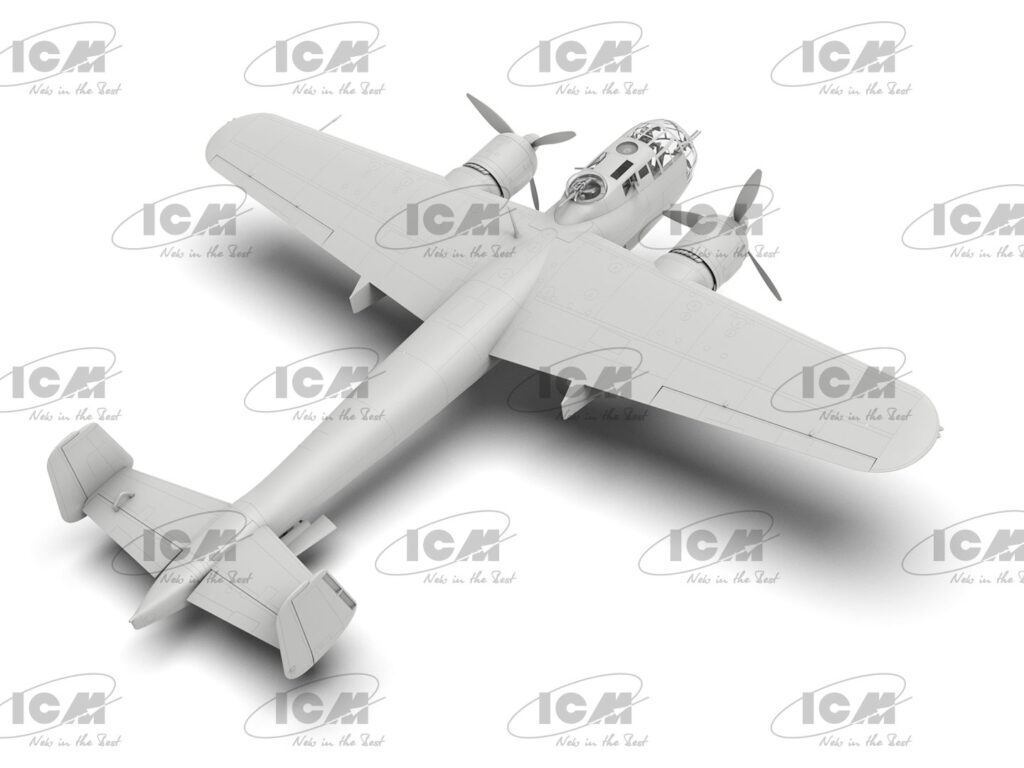
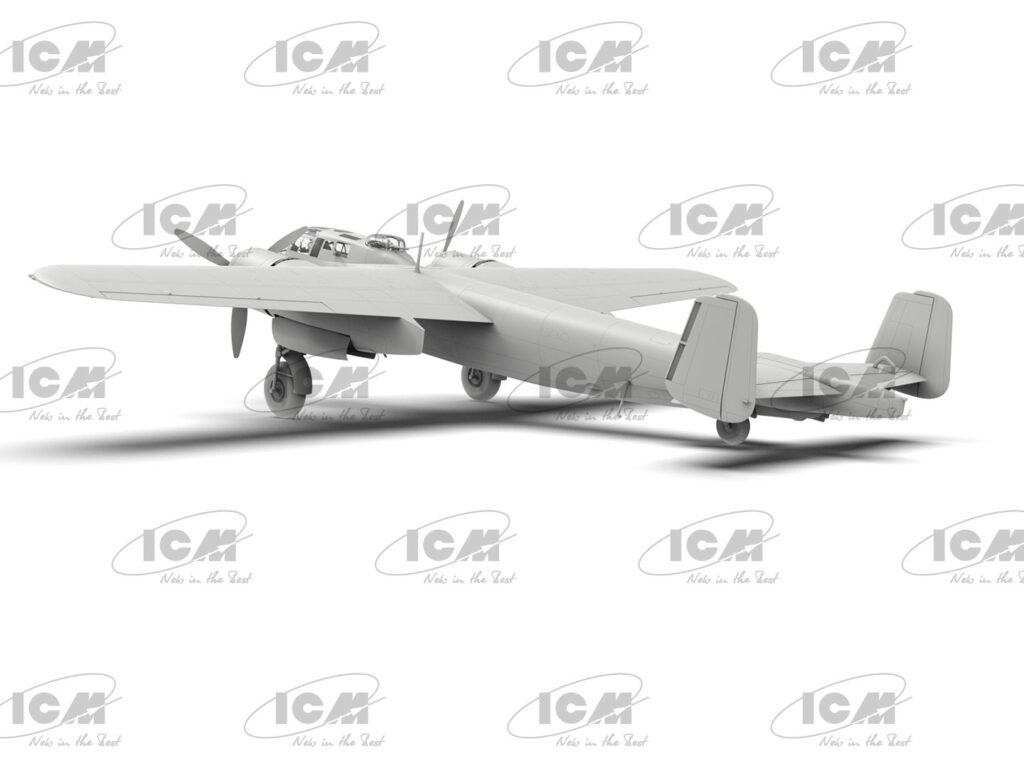
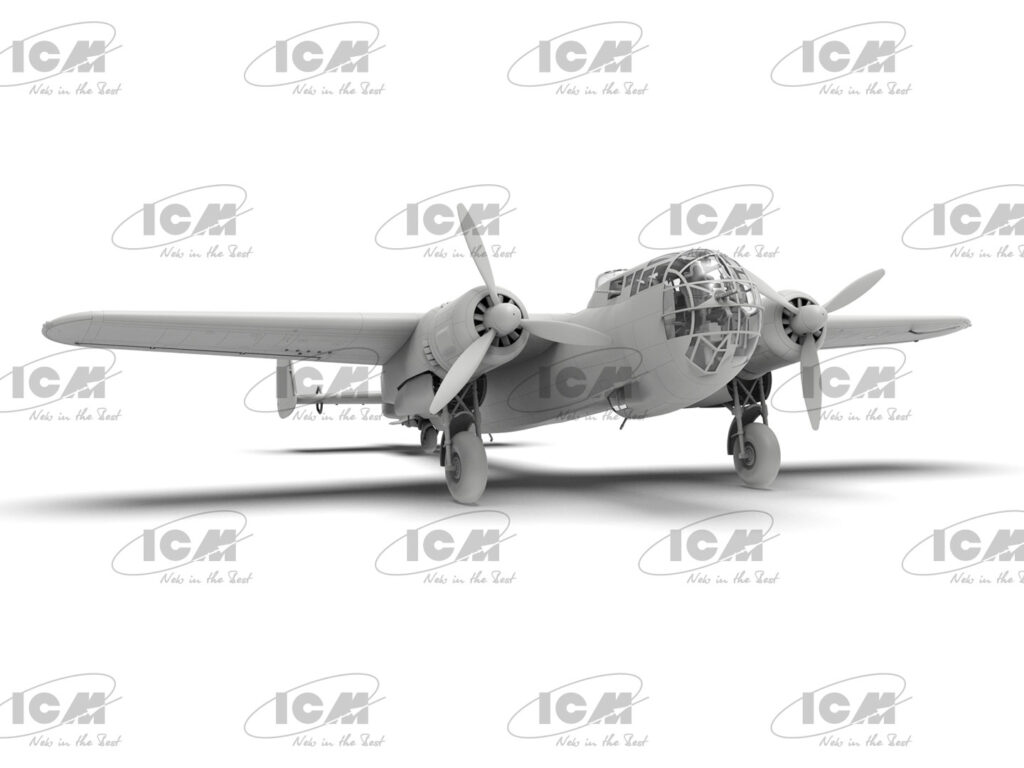
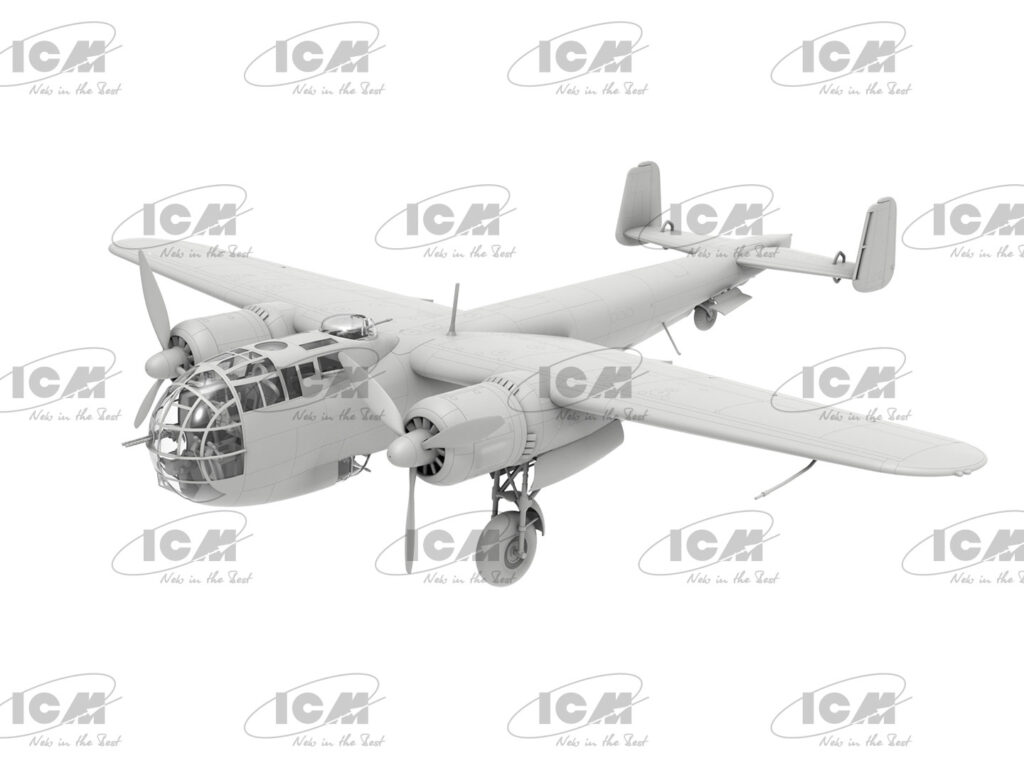
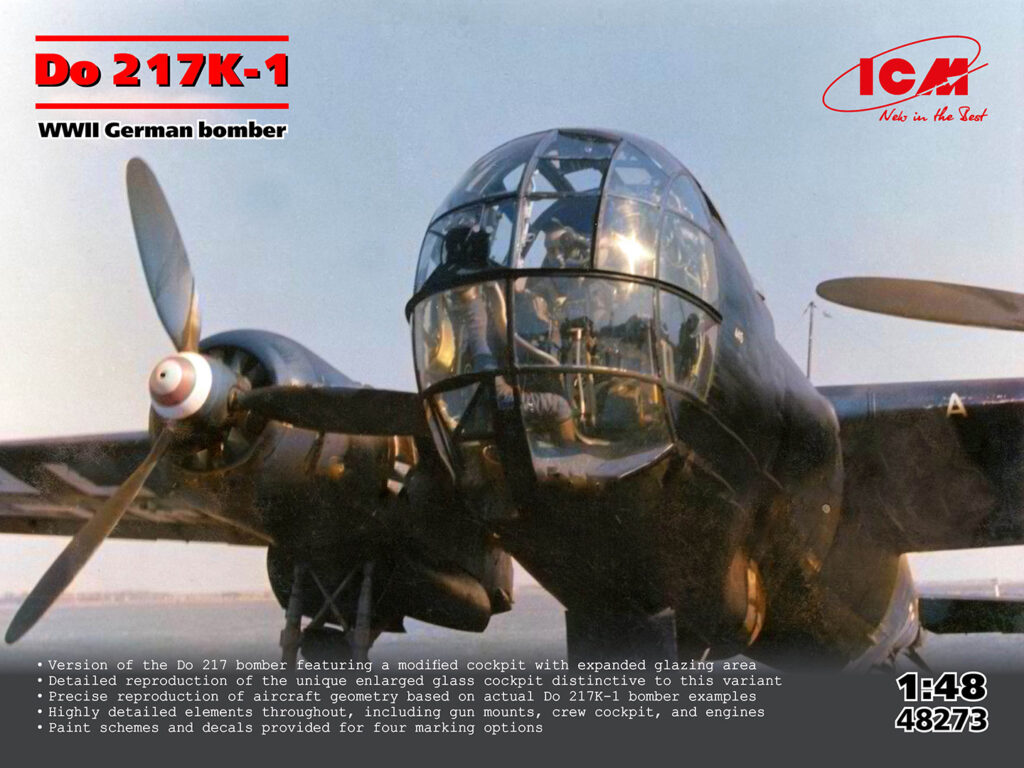
1/48 Do 217K-1
WWII German bomber
In 1914, renowned German airship manufacturer Count Zeppelin established a special design bureau within his company, led by Claudius Dornier. This bureau later evolved into Dornier—one of the Third Reich’s leading aircraft manufacturing firms. The company specialized primarily in producing bombers and maritime aircraft, with the Do 17 and Do 217 series becoming their most notable bomber productions.
The Do 217K-1 bomber was a variant of the basic Do 217 model, featuring a modified front fuselage section. Its new cockpit integrated the upper canopy into a single unit, creating more crew space and enhancing pilot visibility. Powered by twin BMW 80ID engines, the aircraft could reach 515 km/h at 4,000 meters. The bomber featured robust defensive armament at five points (later expanded to seven) and could carry a maximum bomb load of 4,000 kg.
The first Do 217K-1 prototype flew on March 21, 1942, with serial production beginning in autumn of the same year. Though initially conceived as a night bomber, it served in both daytime and nighttime strike operations across Western Europe and the Mediterranean region.

1/32 DH.82A Tiger Moth
World Air Forces
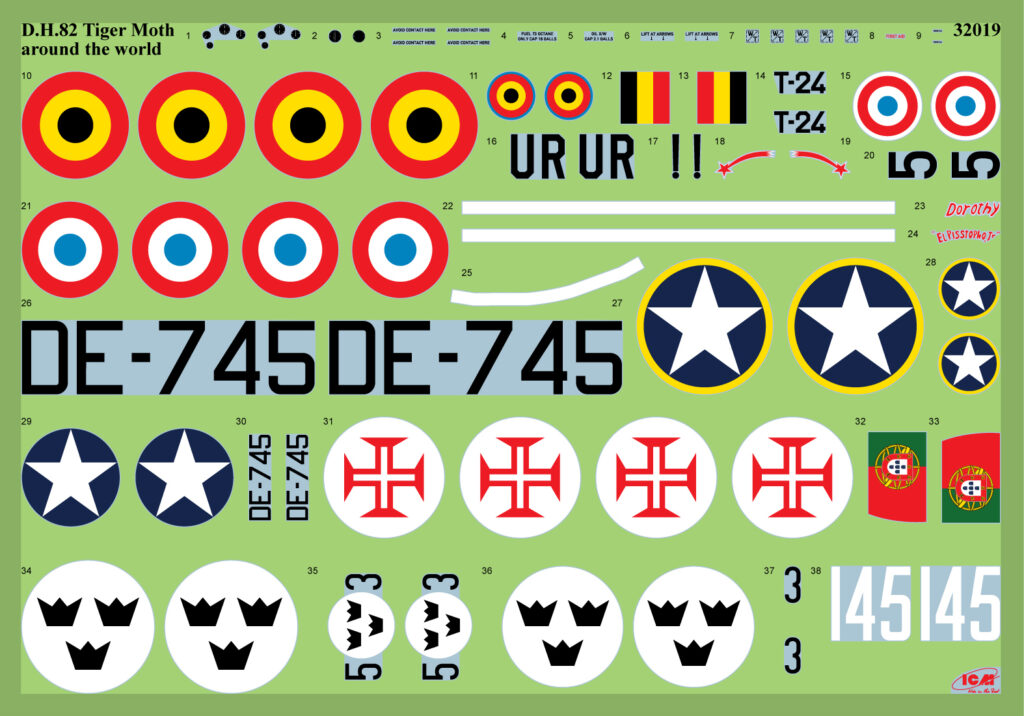
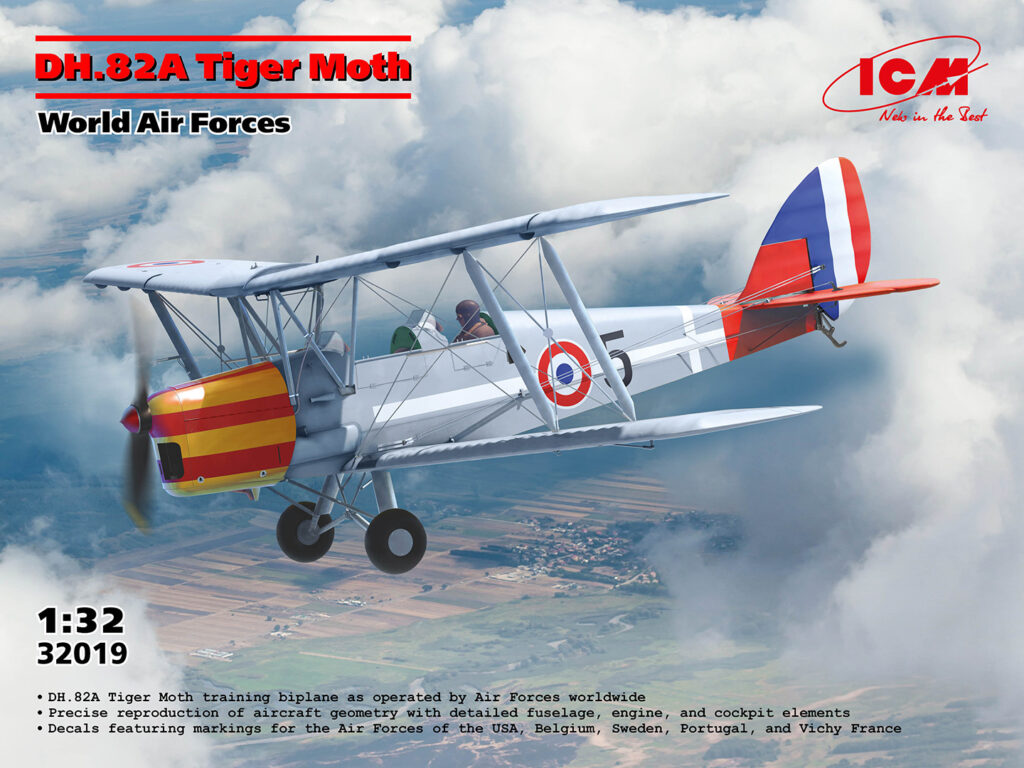
The DH.82A Tiger Moth biplane was developed by de Havilland in the mid-1930s. Produced in large quantities—over 8,000 units by the end of World War II—it served extensively as a training and liaison aircraft. The DH.82A Tiger Moth gained widespread adoption, with Norway, Portugal, and Sweden establishing their own licensed production facilities. The aircraft also saw service with pilots from Belgium, France, and the USA. Simple yet reliable, the DH.82A Tiger Moth earned genuine affection and respect from novice and experienced pilots alike. Some even quipped that the letters “DH” stood for “durable” and ” hefficient”—apt descriptors for this remarkable aircraft. The Tiger Moth continues to delight enthusiasts today, gracing both flying clubs and aviation shows with its presence.
1/48 Captured Heinkel
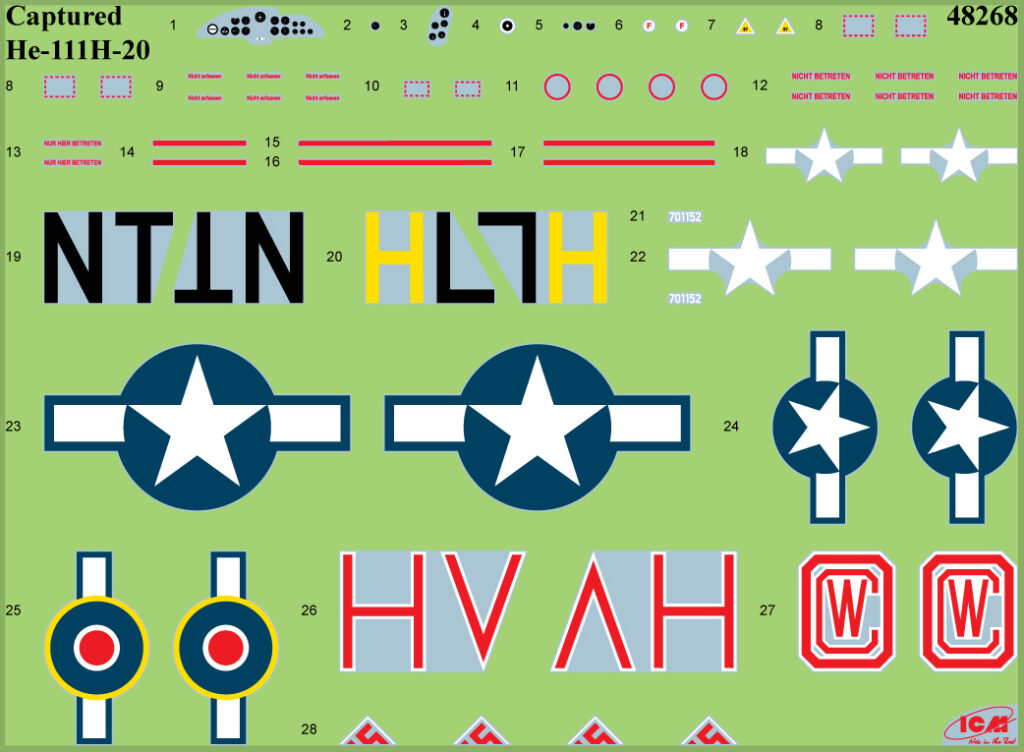
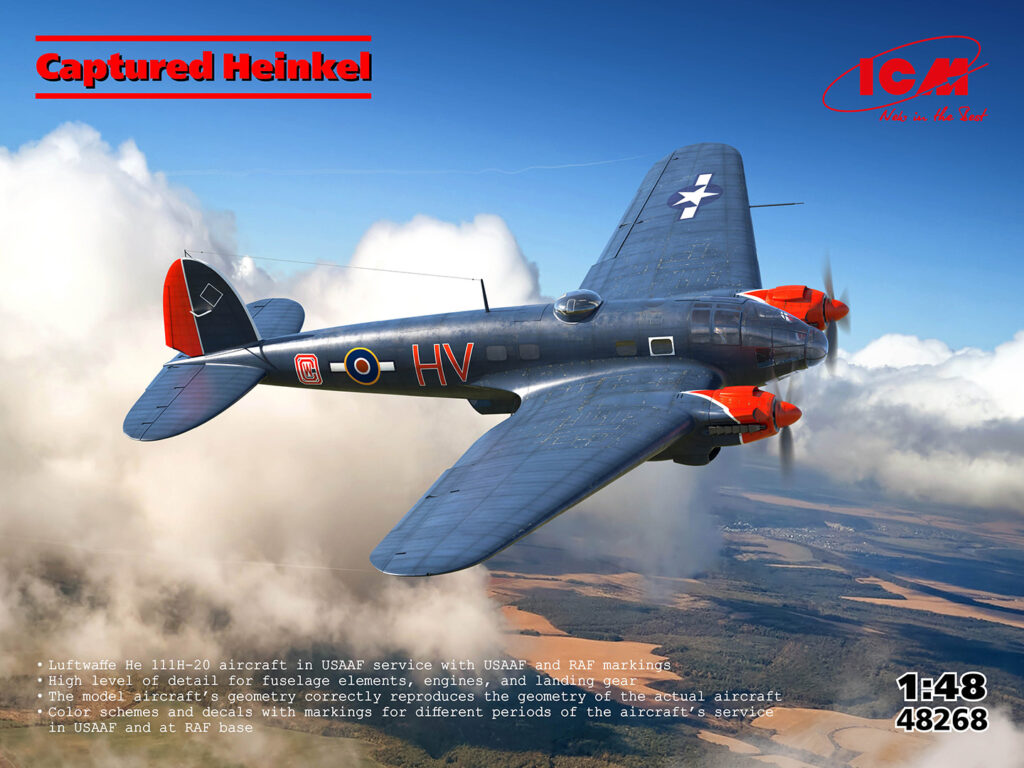
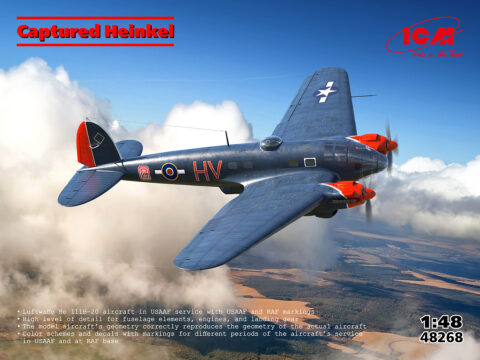
One of the He 111H-20 aircraft has a remarkable history. Built as a transport variant of one of the Luftwaffe’s most widely produced bombers, it was manufactured in 1944 with factory number 701152. During the final days of World War II in Europe, American forces captured and transported it to Cherbourg. The pilots of the 56th Fighter Group USAAF, who were assigned the aircraft, painted it their unit’s signature deep purple color. By September 1945, when it was time to return to the USA, the American pilots faced leaving the aircraft behind. Unwilling to abandon it, the crew made a daring decision—without higher command’s approval, they flew their He 111 to the British airbase at North Weald, where bewildered British pilots discovered it on their airfield the following morning. This bold action ensured the aircraft’s preservation. It was subsequently featured at the German aircraft exhibition at RAE Farnborough, before finding its permanent home in 1978 at the Royal Air Force Museum in London, where it remains today.

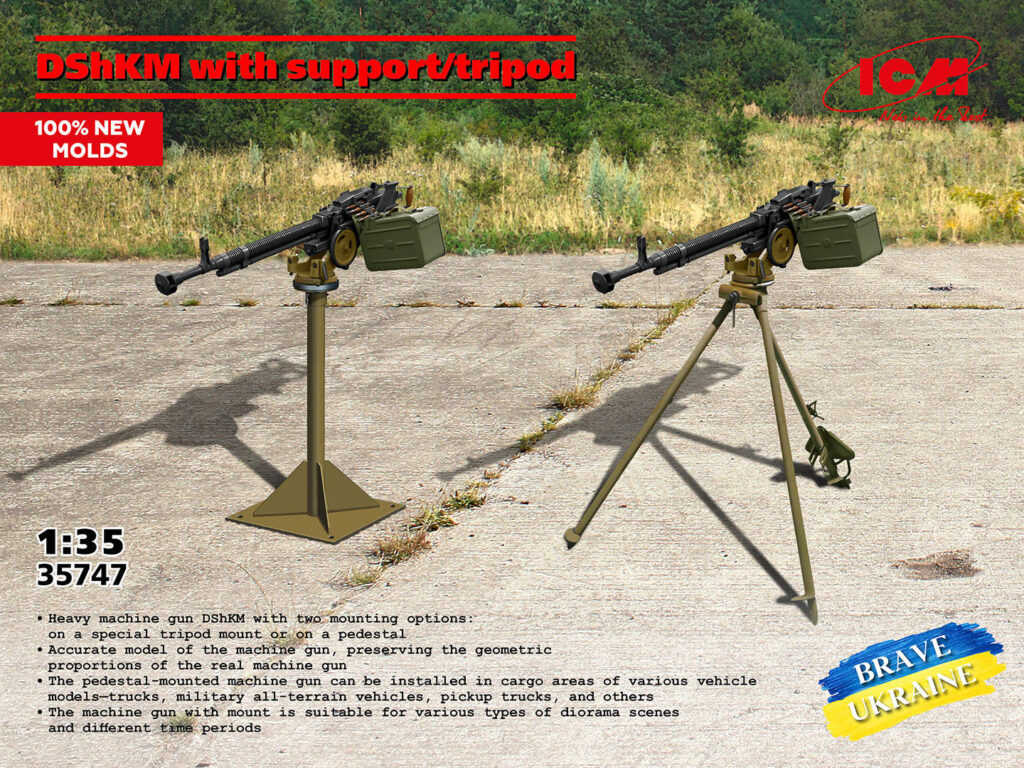
1/35 DShKM with support/tripod
In 1946, the Soviet Army adopted the DShKM heavy machine gun—a modernized version of the previous DShK model. This powerful weapon had broad applications, serving both infantry units and as a mounted weapon on various equipment types. With a muzzle energy of 19.2 kJ and high rate of fire, combined with exceptional reliability, it stands as one of the finest weapons in its class. The DShKM proves highly effective against lightly armored vehicles: its B-32 armor-piercing incendiary ammunition can penetrate 20mm-thick armor at distances up to 500m. The weapon accommodates multiple ammunition types including armor-piercing, incendiary, armor-piercing incendiary, tandem, and explosive rounds. Originally designed for anti-aircraft defense, the DShKM saw extensive use throughout the 20th century and remains in service with various armed forces today. In the Armed Forces of Ukraine, it serves as a heavy infantry weapon, mounted either on special mounts or various pedestals. Additionally, fire groups employ the DShKM in counter-drone operations.

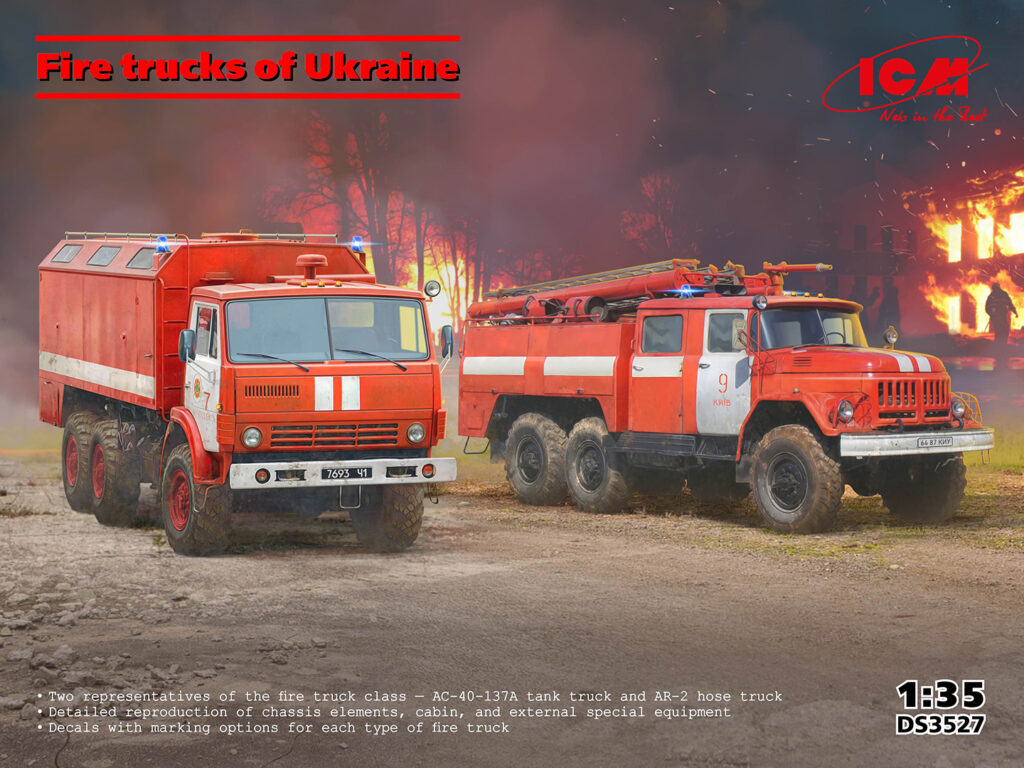
1/35 Fire trucks of Ukraine
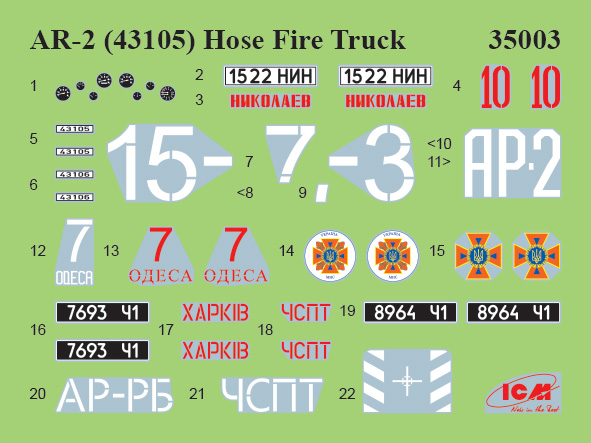
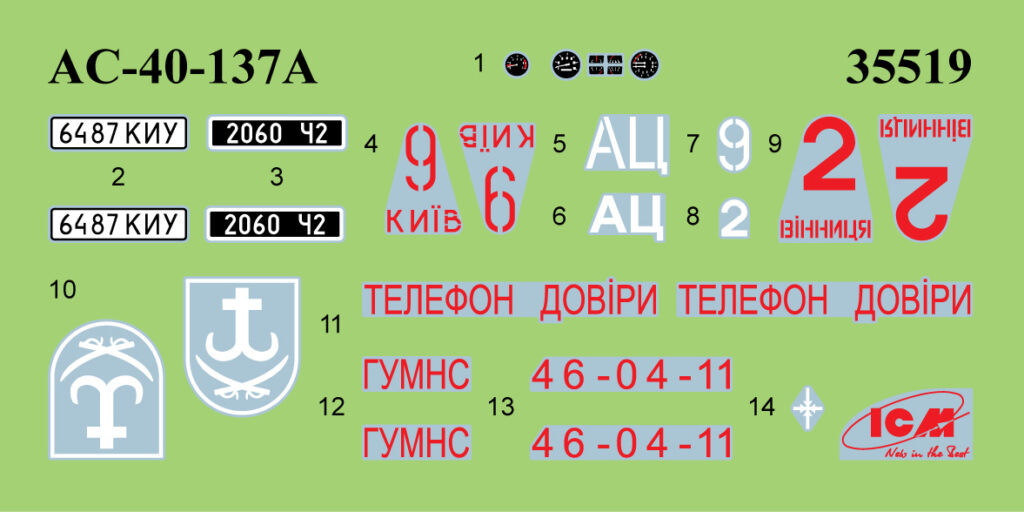
Fire trucks come in two main categories: general-purpose vehicles (tank trucks and pump trucks) and specialized vehicles (aerial platforms, fire ladders, and hose trucks). The AC-40-137A, manufactured by the Pryluky Fire Equipment Plant, exemplifies a typical fire tank truck. This vehicle transports firefighting crews, equipment, water, and fire extinguishing agents. It can combat fires using water from its built-in tank, open water sources, or the water supply network. The truck’s powerful pump delivers up to 40 liters of water per second, complemented by a 2,500-liter tank capacity. A notable specialized vehicle is the AR-2 hose truck, designed for efficient mechanical deployment of fire hose lines to incident sites. Built on a KamAZ all-terrain chassis, the AR-2 features a solid metal body with side and rear doors mounted on a specially prepared frame. The body contains two distinct compartments—firefighting equipment in front and fire hoses in back—and includes adjustable posts for creating various-sized storage sections.
HobbyLink International
eBay Store